

Abstract:
Intersectionality is commonly used to describe how overlapping social identities—such as gender, class, and geography—shape lived experience. While this framework remains essential, this article extends intersectionality beyond identity to examine how it actively structures knowledge production, circulation, and application. Drawing on a trajectory that moves from rural Pakistan to high-technology research laboratories in the United States, and subsequently to agricultural fieldwork in Africa leading to commercialization efforts in the U.S., the article conceptualizes intersectionality as infrastructural labor. This labor includes the often-invisible work of coordination, translation, and adaptation required to move knowledge across institutional, cultural, and material boundaries. Rather than centering on individual achievement or entrepreneurial success, the analysis focuses on how unequal systems shape who performs this work and how scientific technologies take form. By situating transdisciplinary crop protection research within contexts of gendered mobility, resource disparity, and agricultural practice, the article argues that intersectionality operates as a condition of possibility for both learning and design. In doing so, it reframes scientific innovation as a social process embedded in relationships, infrastructures, and accountability across borders.
Introduction
Intersectionality is frequently described as a framework for understanding how multiple social positions such as gender, race, class, and geography intersect to shape experience (Collins & Bilge, 2016). However, intersectionality also shapes how knowledge is produced, whose expertise is recognized, and how ideas and technologies travel across spaces. These dynamics are especially visible in scientific and technical fields that operate across uneven institutional and geographic contexts. At the same time, transdisciplinary research has emerged as a response to complex global challenges that cannot be addressed within single academic fields. Rather than prioritizing disciplinary completeness, such work focuses on real-world problems and emphasizes collaboration across domains of knowledge (Klein, 2014). However, the practical demands of transdisciplinary research—especially across unequal contexts—remain insufficiently examined.
This article brings these two bodies of thought together. Using my personal experience at different platforms, it conveys that intersectionality operates not only as an analytic lens, but as a form of infrastructural labor that shapes coordination, translation, and material practice. Drawing on experiences that span rural education, international scientific mobility, agricultural research, and commercialization, lived experience is used not as an autobiography, but as an analytical lens for broader social processes. My focus is on the often-invisible work required to align people, institutions, and materials across boundaries of culture, discipline, and resource access, and how human learnings from diverse cultural and scientific backgrounds facilitate resource management and achievement of milestones in unusual ways. In this framing, intersectionality becomes inseparable from the infrastructures that support learning, research, and innovation.
Rural Contexts and the Early Politics of Learning
Growing up in rural Pakistan in the last decades of the 20th century meant encountering education within a social environment shaped by tradition, limited institutional access, and strong expectations around gendered roles. For many women in such settings, pursuing advanced education particularly in science was not a straightforward extension of schooling, but a negotiated process. Learning required sustained demonstrations of seriousness, usefulness, and responsibility within established social norms. In that environment, for me, pursuing higher education became a way of negotiating space within a conservative social order, one that valued continuity and care while leaving limited room for deviation. This struggle unfolded within a cultural context of collective responsibility, moral accountability, and mutual support which I continue to respect deeply. Over time, encouragement and support from family members created room for exploration, even as expectations remained. What emerged was a careful reworking of tradition: learning how to carry cultural belonging alongside intellectual ambition.
External validation of competency such as merit-based scholarships often function as critical turning points in this process. Beyond financial support, they signal that competence is acknowledged beyond local environments. Such recognition makes visible an important lesson: knowledge is not neutral. Access to learning, legitimacy, and mobility are deeply shaped by social position and geography. From early on, education becomes linked not only to personal development, but to broader questions of power, negotiation, and movement. In my case, earning merit-based scholarships offered by the education boards and Higher Education Commission (formerly University Grants Commission) throughout college and university education supported my pursuit of higher education not only financially, but also by affirming my academic ability and sense of competence.
Learning Across Borders: How Mobility Reshapes Knowledge
After navigating early constraints around gender and access, mobility itself becomes a site of learning. Opportunities for international training, particularly for students from resource-limited contexts, are often culturally negotiated and socially consequential. Seeking education abroad is rarely a simple departure from tradition; it is more often an extension of earlier negotiations, requiring continued demonstrations of purpose and accountability. During my PhD, the decision to pursue a short term U.S. research fellowship offered by Higher Education Commission of Pakistan did not signal a departure from societal and cultural norms, but rather an extension of the same process through which higher education had been pursued earlier: demonstrating purpose, responsibility, and competence as a woman seeking knowledge. The experience of working in a high-technology research environment fundamentally reshaped how I understood scientific practice: collaboration across disciplines is routine, and research problems are framed around impact rather than narrow specialization. Laboratories function less as isolated spaces and more as interconnected systems linking people, infrastructure, materials, and external contexts. Openness to cultural and intellectual diversity within academic institutions creates conditions in which international students can accelerate learning, build confidence, and form relationships that extend beyond short-term training. Such environments support deeper engagement with research while also fostering mutual understanding—leaving host institutions and communities with a more nuanced appreciation of diverse cultural perspectives and work practices.
For students trained in settings with limited resources, such environments offer both expansion and contrast. They reveal how institutional conditions shape which questions are asked, which problems are prioritized, and which forms of expertise are valued. At the same time, mobility makes visible what is absent. Many challenges that shape everyday life in developing/ under-developed countries—such as power outages, lack of clean water, seasonal impact on quality of crops, agrochemical overuse, declining soil health and lack of operational resources—are often peripheral within advanced research agendas.
Returning to resource-constrained contexts sharpens this awareness. Academic knowledge, when it exists, can feel distant from daily practice, disconnected from the realities of everyday life. Innovation is frequently discussed elsewhere, while its potential users remain overlooked. This gap between formal research and practical application highlights the uneven circulation of knowledge across geography and infrastructure. Rather than resolving this tension, mobility redirects attention toward translation and adaptation. Learning across borders reshapes not only where knowledge is acquired, but how relevance and responsibility are understood. Education becomes a means of bridging divides—between theory and practice, innovation and access, and scientific systems and lived experience.
Transdisciplinary Research as Coordinated Practice
These insights became central during my later engagement in the U.S. as a postdoctoral researcher for a research initiative funded by Bill & Melinda Gates foundation for enhanced food security in African smallholder systems. The project aimed to develop biodegradable, plant-based delivery platforms for targeted delivery of pest control products, addressing crop losses in staple crops such as yam and potatoes. The work not only used my research expertise in material fabrication (Fig. 1 a & b) but offered opportunities for sustained coordination across disciplinary domains, including materials science, chemical engineering, plant pathology, and forest biomaterial, alongside collaboration with universities and research institutes across multiple countries in three continents. Agricultural waste materials (banana harvest residue), procured from Costa Rica and Tanzania were transformed in laboratory settings into functional delivery systems (sheet-like seed wraps (Fig. 2) and deployed in field trials across seven African countries (Benin, Kenya, Togo, Ghana, Uganda, Nigeria, Tanzania). Knowledge, materials, and expectations moved continuously across borders, revealing research as a circulatory process rather than a linear pipeline.
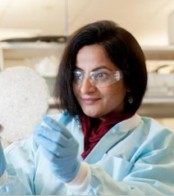
Figure 1a. Tahira Pirzada conducting laboratory evaluation of banana fiber sheet matrix in NCSU Chemical Engineering.
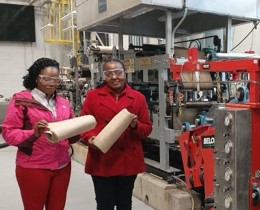
Figure 1b. Beatrice Kashando (RHS) from Tanzania Agricultural Research Institute, Tanzania and Omowumi Adewuyi (LHS) from International Institute of Tropical agriculture, Nigeria holding sheet rolls ready for field testing. (African collaborators’ visit to NCSU Forest Biomaterials production facility).
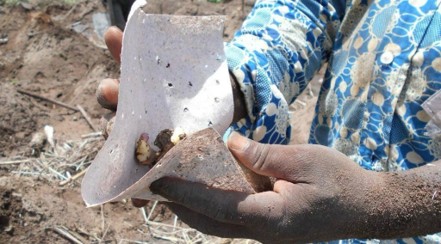
Figure 2. A yam seed piece wrapped with a banana sheet matrix by a farmer in Benin (Pirzada et al., 2023, Photo credit Prof. Antoine Affiokpon, University of Abomey-Calavi, Benin).
Within this setting, intersectionality was not an abstract concept. It shaped everyday work. Coordination involved mediating among actors with different priorities: scientists focused on material performance, researchers were concerned with biological outcomes, social scientists examined adoption and profitability, collaborators emphasized labor constraints, and funders sought evidence of scalability. Transdisciplinarity functioned less as an ideal than as an ongoing effort to align diverse forms of expertise.
Periods of disruption made this coordination work especially visible. When the COVID-19 pandemic interrupted global mobility and supply chains, transnational research workflows became fragile. Borders closed, shipments stalled, but agricultural seasons continued regardless of institutional timelines. For our teams, keeping projects moving required constant improvisation: reorganizing laboratory access, negotiating alternative distribution pathways, and coordinating logistics under rapidly changing conditions. Such labor rarely appears in scientific publications, yet it is essential to research that spans unequal contexts. It is relational, emotional, and infrastructural. Disruption also revealed how vulnerability is unevenly distributed within global research systems. Delays affect actors differently depending on access to resources, institutional buffers, and local constraints. While we were able to prepare, ship, and get our material in the field in five African countries, coordinating across these differences was not only a technical challenge, but an also an ethical one—raising questions about responsibility, accountability, and design.
Material Translation into Agricultural Practice
At the material level, the project involved translating agricultural waste into functional infrastructure. Agrochemical delivery platforms were produced using plant residues through low-impact, processing methods. By adjusting composition and structure, it was possible to tune performance. Design choices were inseparable from context. Materials needed to be affordable, biodegradable, scalable, and compatible with smallholder practices. Here, form emerged as much from social and environmental constraints as from laboratory optimization. Agricultural waste became a site where environmental concern, local availability, and scientific design intersected.
Field trials demonstrated that low-dose delivery systems could effectively control pests while improving yield and crop quality (Pirzada et al, 2023; Ochola et al. 2022). Beyond technical performance, these outcomes altered everyday conditions for farmers, reducing losses, improving storage, and increasing market value (Dedehouanou et al.,2022., Fig. 4). Quality, in this context, was not aesthetic. It was directly tied to livelihood stability, food security, and household resilience. Sustainable crop protection is not only about reducing chemical inputs. It is about redesigning relationships between materials, soils, farmers, and food systems. Biodegradable matrices derived from agricultural waste close loops. Ultra-low-dose delivery reduces environmental burden. Improved quality reduces waste and improves farmers’ returns in terms of premium pricing of high quality produce. Intersectionality ties these threads together: environmental sustainability, economic viability, and social wellbeing are thus not separable objectives.
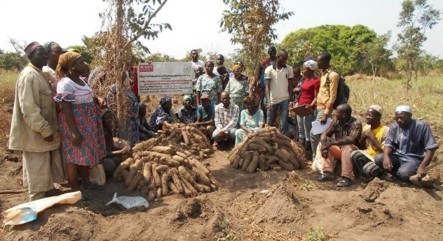
Figure 3. Farmers in Benin with harvested yam tubers. Photo credit Prof. Antoine Affiokpon, University of Abomey-Calavi, Benin.
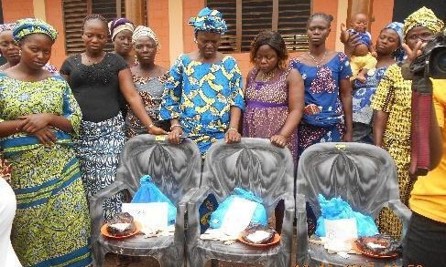
Figure 4. Evaluation of the yam flour quality in Benin. Photo credit Prof. Antoine Affiokpon, University of Abomey-Calavi, Benin.
From Research Output to Organizational Form
As the technology matured, its trajectory shifted from an experimental research artifact to an organizational form designed to enable broader adoption across agricultural systems. While the initial validation focused on smallholder farmers in resource-limited contexts, subsequent work examined how these insights could inform large-scale farming practices. This required engaging with farmers in the U.S., existing pest-control products and agrochemical manufacturers to understand how performance, formulation format, and integration into current value chains shape commercialization potential. Participation in the U.S. National Science Foundation’s Innovation Corps (I-Corps) programs enabled me and key team members to reach out to dozens of ecosystem stakeholders to evaluate the market need, stakeholder landscape, and commercialization potential of a technology that had demonstrated efficacy through extensive laboratory and field validation. Effectiveness alone was not sufficient; how a technology is delivered, handled, and adopted proved equally critical. These considerations informed the establishment of Soteria Formulations (www. soteriaformulations.com), a North Carolina–based startup created to commercialize a delivery platform validated through years of multiple field validations in different countries. The formation of the company marked a transition from research output to institutional embodiment. An organization, in this sense, functions as a designed system: it encodes priorities and values about relevance and responsibility. The platform’s origins in smallholder agriculture shaped how problems were framed and why low-dose efficacy, ease of use, and biodegradability were prioritized. Early validation emphasized performance under real-world conditions rather than optimization within controlled environments.
Team formation and leadership practices reflected this orientation.
The organization brought together expertise spanning formulation science, plant pathology, materials engineering, and technology commercialization, with attention to collaboration across disciplinary and cultural differences. My personal evolution—from a rural background to international academic and research environments, and from project management within complex collaborations and scientific programs to the challenges of commercialization—shaped how I understood leadership as both relational and adaptive. The struggles and triumphs of overcoming societal barriers, navigating academic systems, managing cross-cultural collaboration, and fulfilling institutional expectations became part of the preparation that enabled me to lead Soteria Formulations as CEO. Leadership relied less on hierarchy and more on relational coordination, recognizing that innovation at this scale depends on aligning diverse forms of knowledge and experience. Here, intersectionality became collective rather than individual: the organization itself operated as an assemblage shaped by multiple social, institutional, and epistemic positions. The transition from academia to entrepreneurship further intensified the work of translation. Technical complexity had to be rendered legible to partners, investors, regulators, and industry collaborators. This translation was not neutral. It was shaped by power, credibility, and expectations about who is authorized to speak for technology.
For founders from underrepresented backgrounds, entrepreneurial learning involved both skill development and ongoing negotiation of identity and legitimacy. Drawing on prior experiences navigating cultural and institutional boundaries proved critical in shaping how audiences were addressed, how trust was built, and how value was communicated. In this context, translation itself became a form of design labor—shaping not only how technologies were understood, but how they were valued, supported, and scaled. Commercialization emerged not as a departure from earlier commitments to sustainability, but as a continuation of them, extending lessons learned from resource-constrained farming systems into broader agricultural markets. This journey from research to entrepreneurship thus reflects a cumulative process in which learning, mobility, and intersectional positioning informed the development of technologies—and organizations—aimed at more sustainable agricultural practice and a larger global impact.
Conclusion
This article has argued for a broader understanding of intersectionality—not only as a framework for identity, but as a material and organizational condition that shapes coordination, translation, and design. Grounded in experiences that span rural education, international mobility, transdisciplinary research, and commercialization, it shows how intersections of gender, geography, institutional power, and material infrastructure shape what can be learned, built, and sustained. From this perspective, personal journeys become part of the infrastructure through which knowledge travels. The work of coordination emerges as a creative and often unseen form of labor, and scientific innovation appears as a social practice embedded in unequal systems. Sustainable crop protection, in turn, becomes more than a technical solution—it becomes a space where care and social transformation take material form.
The solutions discussed here, particularly crop residue based delivery systems to establish sustainable crop protection technologies, make this argument material. These delivery systems (sheet wraps as foundational formats together with granular and seed coating formulations currently being developed at Soteria Formulations) are not simply technical platforms for carrying active ingredients to plants. They are sites where multiple forms of knowledge must come together: materials science, plant pathology, agronomy, soil ecology, formulation engineering, farmer experience, regulatory knowledge, and environmental responsibility. Their development depends on transdisciplinary labor—the labor of translating between laboratory results and field realities, between scientific performance and grower adoption, and between environmental goals and commercial feasibility.
Viewed intersectionally, these delivery systems also respond to overlapping vulnerabilities in agriculture. They address crop loss, input cost, pesticide exposure, environmental contamination, climate stress, and unequal access to sustainable technologies. A biodegradable or crop-residue-based delivery platform, therefore, becomes more than a formulation strategy; it becomes a way of reorganizing relationships among waste, value, plants, people, and ecological systems. It links agricultural residues to new material infrastructures, reduces dependence on conventional chemical delivery, and creates possibilities for agricultural practices that are more sustainable, accessible, and responsive to diverse agricultural contexts.
Sustainable agriculture, in turn, becomes more than a technical solution. It becomes a space where care, responsibility, and social transformation take material form. By bringing together scientific experimentation, lived experience, environmental ethics, and practical agricultural needs, these technologies demonstrate how innovation itself can be understood as a kind of intersectional infrastructure labor: the ongoing work of building systems that hold together social justice, ecological resilience, and material design.
Acknowledgements
The author gratefully acknowledges the support, guidance, and encouragement of family members, mentors, colleagues, and peers who contributed to the development of content for this article directly or indirectly. The author also appreciates the individuals and communities whose experiences, perspectives, and resilience informed the reflections presented here. Any remaining errors or omissions are solely the responsibility of the author.
References:
01. Collins, H., & Bilge, S. (2016). Intersectionality. Polity Press.
02. Klein, T. (2014). Interdisciplining Digital Humanities.
03. Nicolescu, (2010). Methodology of Transdisciplinarity.
04. Pirzada et al., (2023) Plant-biomass-based hybrid seed wraps mitigate yield and post-harvest losses among smallholder farmers in sub-Saharan Africa. Nature Food, 4, 148–159.
05. Ochola, et al. (2022) Wrap-and-plant technology to manage sustainably potato cyst nematodes in East Africa. Nature Sustainability, 5, 425–433.
06. Dedehouanou et (2022) Wrap & Plant Technology: An Innovative and Cost-Effective Method for Seed Yam Treatment for Nematode Control in Fields.
Advances in Social Sciences Research Journal, 9(5). 39-59.