
Abstract:
As a digital artist and educator influenced by the sensory world of Faisalabad, Pakistan- a city known for its walled localities, dense street life, folk narratives, and ecological textures, and a practitioner of worldwide disseminated digital tools (including Adobe Creative Cloud Applications), my practice resides in what Gloria Anzaldúa (1987) names the in-between: a shifting, generative terrain where digital technology, personal identity, and cultural memory negotiate with each another. This essay blends my game art practice, game design explorations, and pedagogical interventions in a classroom setting to propose intersectionality beyond its sociopolitical origins as a creative method for world-building, teaching, and imagining new futures in game art and design.
Using Donna Haraway’s influential essay Situated Knowledges: The Science Question in Feminism and the Privilege of Partial Perspective (1988) and Kimberlé Crenshaw’s foundational writings on intersectionality (1989; 1991), I outline how local visual vocabulary, colloquial architecture, folklore, and ecological textures can be translated into the world of digital games without being blurred or overshadowed by dominant global aesthetics. This blending was accomplished through classroom experiments involving two design instructions; one demanding Pakistani cultural grounding, and the other, culturally unrestricted. I observed that the “restricted” group consistently created more creative, emotionally resonant, and critically aware artworks. The outcomes demonstrate that cultural ancestry can work as an intense generator of creative possibility.
Accompanying my own digital concept artwork and 2d game concept art, the body of work produced by the students of National Textile University position the design studio as a laboratory in which materials, bodies, technologies, and histories cross each other, resonating Audre Lorde’s (1984) insight of difference as creative power. Here, students obtain not only hard skills but also the art of unlearning an inherited folder of visual influence, challenging worldwide conceptions of what video game environments, storytelling, and characters should look like.
Lastly, this essay contends that reclaiming local Pakistani existence in video games is not an act of nostalgia but an immediate epistemic and aesthetic intervention. When local folklore or myths encounter modern software, when architecture or local landscape encounter concept art, and when pedagogy encounters intersectionality, new worlds become feasible and more attractive. These new worlds are grounded in care, cultural specificity, and the transformative possibility of the in-between.
Keywords: in-between, visual art, design pedagogy, digital art
Locating the In-Between
Digital game worlds have spread globally with remarkable pace, yet their visual language and world building remain prominently narrow. From hyper-realistic Western architecture/worlds to fantasy-based environments rooted in Eurocentric mythologies and symbols, mainstream video games continue to redevelop familiar aesthetic hierarchies, leaving many cultural worlds and architectures underrepresented or completely absent. The rich history, folklore, myths, symbols, landscape and architecture, and ecological textures of Pakistani visual culture are rarely included in these digital mediums. This void is more than just a representation issue; it reflects the power structures that determine which histories are playable and which worlds and stories are not.
The underrepresentation of Pakistani realities in games is not limited to visual aesthetics. It extends to the social, ecological, and ethical concerns that shape Pakistani daily life — from food insecurity and urban waste to informal labour economies and community care practices. These concerns rarely appear in mainstream game narratives, which tend to privilege conflict, competition, and accumulation as primary mechanics. This essay proposes that intersectional design pedagogy and culturally situated game art can begin to address this absence — not by making ‘issue games’ in a didactic sense, but by building worlds whose internal logic is shaped by local values, local problems, and local forms of care.
My own situatedness is specific: I am a Punjabi educator and digital artist based in Faisalabad, Pakistan, working within the Bachelor of Animation and Multimedia Design programme at the National Textile University (NTU). My visual sensibility has been shaped by the mohallas of Faisalabad — its congested galis, the rhythmic patterns of textile mills, the colour of local bazaars, and the oral narratives embedded in Punjabi folk traditions. It is from this particular location that my creative and pedagogical practices emerge.
As a digital artist and educator, I was shaped by the visual culture of Punjabi communities and worked within digital production pipelines and with widely accepted industry-standard tools such as Adobe Photoshop, Illustrator, and Moho. I live in what Gloria Anzaldúa describes in Borderlands/La Frontera: The New Mestiza (1987) as the “in-between”; a dynamic, generative space where identity, technology, and cultural memory regularly interact. This is a dynamic position rather than one that is static or resolved. New visual languages, pedagogical approaches to art and design, and world-building techniques can arise within this borderland.
This essay uses intersectionality not just as a tool to study identity, but as a creative approach—a way to think, create, and teach in game art and design. Drawing on Donna Haraway’s (1988) idea that “all knowledge is situated,” the work emphasizes how creative practices always reflect the worlds they come from. In my case, these traces include the textures and symbols of regional Punjabi architecture, elements of Punjabi folklores, lived social realities, and the experiences of undergraduate students in the Bachelor of Animation and Multimedia Design programme at NTU Faisalabad — specifically, students from the 2023–2024 batch enrolled in my Fundamental of Texture and Lightening Studio — who are developing their creative identities within digital spaces. Intersectionality, described by Kimberlé Crenshaw (1989; 1991), offers a foundation to understand how these layers overlap instead of existing separately.
Within this framework, the studio is more than just a place to learn skills. It becomes a space for intersectional inquiry where students, materials, technologies, and histories come together. In a specific lab classroom experiment, I asked students to design game characters and environments under two different conditions. One group had to base their work on the Pakistani cultural experience, while the other was given complete freedom to choose their aesthetic and creative direction.
Interwoven with this teaching exploration is my own game art practice. My digital paintings and 2D concept designs translate local architecture, folklore ideas, and regional ecosystems into imagined digital worlds. These works do not aim to nostalgically reproduce tradition. Instead, they reposition ancestral forms to engage with modern software and allow memory to interact with digital strokes. In this process, they challenge common beliefs about what game worlds, stories, and characters should look like.
Drawing upon Audre Lorde’s reflections on difference in Sister Outsider (1984), where she frames difference as a site of creative power rather than alienation, this essay stages intersectionality as an ethics of making. If students are to develop technical proficiency in game art — including both digital craft skills (rendering, rigging, environment design) and critical design literacy — they must first do the harder work of unlearning inherited visual hierarchies: those which treat universalized, Eurocentric aesthetics as neutral defaults, and local visual languages as decorative exceptions. The hybrid quality of this essay, which weaves written analysis together with concept art, process sketches, and speculative game world visuals reflects this intersectional methodological stance: a commitment to letting visual and textual material speak together, across cultural contexts and disciplinary boundaries, rather than subordinating one to the other.
Eventually, this work argues that reclaiming Pakistani presence within digital worlds of games is not an act of nostalgia, but a crucial epistemic and aesthetic intervention. When folklore encounters digital tools, when architecture encounters concept art, and when pedagogy encounters intersectionality, new worlds become feasible — worlds shaped by cultural memory, critical imagination, and the productive tensions of the in-between.
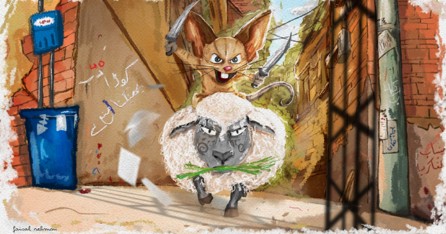
Fig. 1. Digital Game Concept Art Set in a Pakistani Urban Streetscape
Intersectionality as a Creative Method
Intersectionality is most usually understood as a framework for analysing overlapping systems of power, identity, and marginalization. However, within creative practice and particularly within art and design pedagogy, intersectionality can function less as a category of analysis and more as a method of creating. In this context, it functions not primarily to classify identities, but to shape how decisions are made, how constraints are negotiated, and how relationships among material, culture, technology, and imagination are configured.
Kimberlé Crenshaw’s primary articulation of intersectionality in Demarginalizing the Intersection of Race and Sex (1989), and later in Mapping the Margins (1991), emphasized the inadequacy of singular frameworks in capturing varied lived experiences. While her study emerged from legal and social critique, its implications expand beyond sociopolitical analysis into creative inquiry. For designers and artists, intersectionality proposes that forms, contents, and processes are never neutral; they are always informed by certain histories, tools, and positionalities. In digital game art and design, this signifies that environments, characters, game mechanics, and narratives carry embedded assumptions about whose worlds are rendered visible and whose are rendered peripheral.
Donna Haraway’s essay Situated Knowledges: The Science Question in Feminism and the Privilege of Partial Perspective (1988) additionally sharpens this understanding. Haraway denies the illusion of universal, disembodied objectivity, arguing instead that all knowledge surfaces from specific positions, bodies, and conditions. Applied to creative practice, this framework reevaluates cultural specificity not as a bias, but as an epistemic strength. In practice, this means that when I design a game environment referencing the crumbling plaster walls and hanging wires of a Faisalabadi gali, I am not decorating a neutral digital space with ethnic motifs. I am making a spatial argument that this texture, this light, this density of life carries design intelligence that no global pipeline can replicate. The local is not a limitation to overcome — it is the methodology itself. Within my own pedagogical approach and artistic work, this aspect allows Pakistani visual culture- architecture, stories, spatial rhythms, and ecological textures- to function as an appropriate source of design intelligence rather than decorative reference added after the fact.
Gloria Anzaldúa’s notion of nepantla (1987), articulated in Borderlands/La Frontera: The New Mestiza as the in-between space of transformation, offers a language for expressing how these situated knowledges function in practice. The art and design studio of NTU becomes a borderland where students and educators negotiate between rooted visual hierarchies and emerging creative possibilities. Digital tools, generally understood as culturally neutral, are revealed instead as sites of negotiation where universal pipelines intersect with local memory. It is within this fickle terrain that new forms emerge, not by resolving contradiction, but by working through it. In the NTU studio, this borderland is not metaphorical. Students trained in software built in other countries use those tools to render courtyards their grandmothers grew up in, translate Punjabi riddles into game narrative logic, and encode the spatial rhythms of the walled city into level design. The friction between the tool’s origin and the material’s origin is itself the creative site.
Audre Lorde’s declaration that difference is not an intimidation but an origin of creative power (1984) resonates strongly within this pedagogical context. Instead of encouraging students to smooth out differences in pursuit of global aesthetic fluency, intersectionality as a creative method calls them to work through differences to treat cultural grounding as an effective design constraint. In practice, this manifests through projects or creative practice tasks that deliberately foreground locality, memory, and context. These constraints do not restrain imagination; instead, they enhance it by demanding deeper engagement, ethical attention, and formal innovation.
Across classroom practice and personal work, intersectionality thus operates as a structuring logic rather than a thematic label. It outlines how briefs are written, how references are selected, how critique is performed, and how effective outcome is evaluated. The question changes from, “Is this universally legible?” to “What worlds does this work emerge from, and what worlds does it make feasible?” In this sense, intersectionality turns into an operative design methodology, one that empowers creative practice to function as a site of care, unlearning, and world-building. Perhaps this reorientation — from universality to situatedness — is the methodological core of this essay.
Translating Pakistani Visual Vocabulary into Game Worlds
Visual culture of Pakistan are made up of a wide and diverse range of forms, from the thick spatial rhythms of informal metropolitan neighbourhoods to the symbolic richness of local folklore and myth. Architectural elements such as courtyards, walled city skylines, balconies, congested streets, and layered posters and billboards shape daily experiences of space, while ecological textures like dust, humidity, foliage, light, inflect how environments are experienced and inhabited. These visual and sensory attributes offer fertile ground for digital world-building, yet they are seldom -considered within mainstream game design above surface-level representation.
My own game art practice approaches these materials through translation rather than replication. Digital paintings and 2D concept art reimagine the vernacular architecture of Faisalabad and Lahore — their walled-city streetscapes, chowks, and layered signage — alongside rural Punjabi landscapes, using industry-standard tools including Adobe Photoshop and Illustrator, enabling local forms to encounter universal production pipelines without being reduced to static symbols or nostalgic pastiche. Instead, cultural memory intersects with technological affordances, and traditional visual grammars are redesigned through digital techniques.
A critical distinction must be drawn here. Mainstream examples of ‘culturally inspired’ game art — from the orientalist visual vocabulary of Disney’s Hercules (Eurocom, 1997) and Aladdin (Virgin Games, 1993) to the flattened South Asian aesthetics of games like Far Cry 4 (Ubisoft, 2014) — treat local culture as costume, atmosphere, or exoticism. The visual signifiers of culture are present, but the cultural logic — the spatial relationships, the symbolic layering, the social relationships embedded in architecture — is absent. My practice resists this by treating cultural forms as structural rather than decorative: the density of a mohalla does not merely look like a Pakistani street, it behaves like one, with the spatial compression, the overlap of private and public, the accretion of histories embedded in its walls. The goal is not to evoke recognition in a Western player but to construct a world that carries internal cultural coherence.
Significantly, this approach resists the tendency to handle local culture as a thematic overlay applied to otherwise common game systems. Instead, cultural specificity informs spatial design, narrative logic, and environmental storytelling. By situating Pakistani visual vocabularies within game worlds-whether set in imagined futures, alternate presents, or historical reframing — the practice challenges the assumption that local culture belongs only to the past or to realist documentary modes. A Faisalabadi street can be the setting for a speculative science fiction game; a Punjabi legend can generate mechanics for a contemporary action platformer.
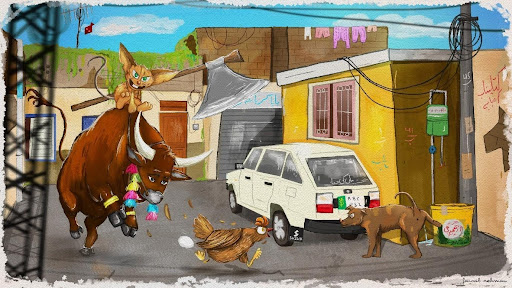
Fig. 2. Character and Environment Concept Art Drawing on Faisalabadi Streetscapes, Local Transportation, and Muhalla Architectural Forms
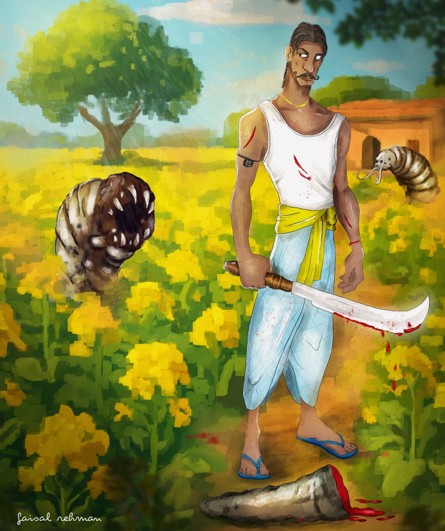
Fig. 3. Character Design of a Punjabi Village Man (Game Character Concept Art)
The Studio as an Intersectional Laboratory: Pedagogical Experiment
The Fundamentals of Texture and Lighting Studio at the National Textile University (NTU), Faisalabad function not merely as a space for skill acquisition but as a testing ground where creative constraints reveal the deep entanglement of identity, memory, technology, and cultural positioning. In the 2023–2024 academic year, I conducted a structured design experiment with undergraduate students in the Bachelor of Animation and Multimedia Design programme. Both groups received identical project briefs, timelines, assessment criteria, and access to the same software — primarily Adobe Photoshop and Illustrator for visual development, with optional use of Moho or After Effects for basic environment presentation. The sole variable was the source of creative reference.
The culturally grounded group — asked to root their game characters and environments in Pakistani visual culture — produced work of striking specificity and intentionality. One student, drawing from childhood memories of Gulberg, Faisalabad, developed an environment around a beloved neighbourhood shop (see Fig. 4): the work captured not just the shop’s visual form but its social geometry, the shade of the peepal tree, the ritual of eating pattha, the communal ownership of a space that was never officially ‘public.’ Another student translated his ancestral haveli in Koray Shah, Sahiwal, into a Tekken-style fighting arena (Namco, 1994) (see Fig. 5), retaining the architectural grammar of the haveli, its arched doorways, warm plaster tones, courtyard scale — while recontextualising it within the kinetic logic of a fighting game. A third student created a 2D fighting arena set in a Sindhi wasteland, drawing on the region’s historical tensions between Sindhi and Baloch identities, encoding this inter-ethnic complexity into the character design and environmental atmosphere (see Fig. 6). In each case, the cultural constraint did not limit the students’ imagination — it deepened it, forcing engagement with spatial memory, social symbolism, and contextual meaning.
The unrestricted group produced technically accomplished work, but their outputs revealed a different kind of imaginative constraint: the constraint of existing visual hierarchies. Without a cultural anchor, many students defaulted to the dominant aesthetic languages of mainstream games — the high-fantasy character designs of League of Legends (Riot Games, 2009), the hyper-stylised environments of Genshin Impact (miHoYo, 2020), and the militarised urban aesthetics of Call of Duty (Infinity Ward, 2003). These are not failures of skill; they are symptoms of a visual culture in which ‘neutral’ or ‘universal’ design defaults to a particular, globalised aesthetic vocabulary. The absence of cultural grounding did not produce creative freedom — it produced creative dependency.
This contrast illuminates intersectionality’s function as a design methodology rather than a theoretical label. For the culturally grounded students, design decisions were inseparable from questions of memory, identity, and meaning: Whose space is this? What does it remember? What does it value? These questions constitute what Haraway (1988) would call situated knowing — knowledge that is always embodied, always positioned. Students were not simply making games; they were negotiating between personal experience and digital form, between inherited visual grammar and new technological affordances. In doing so, they engaged in a process of epistemic unlearning: questioning whose aesthetics count as ‘neutral,’ whose references are considered universal, and whose visual languages are rendered peripheral. The experiment also reshaped the studio’s critique culture. Peer discussions shifted from surface-level assessments of technical polish toward deeper conversations about intention, memory, and ethical representation. Students were able to articulate why certain forms felt meaningful — how the colour palette of a Punjabi harvest field carried emotional registers that no reference board could reproduce, or how the spatial compression of an old city street communicated a social reality that an open-world fantasy map could not. Digital tools, once assumed to be culturally neutral instruments, were revealed as sites of negotiation where the tool’s embedded assumptions and the student’s cultural memory met, even though sometimes in friction, but always productively.
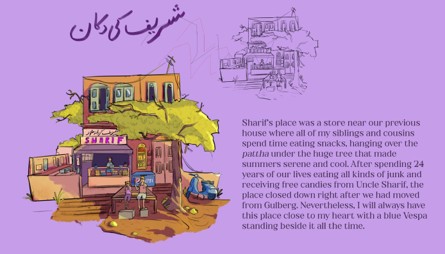
Fig. 4. Student Environment Design Inspired by Childhood Memories

Fig. 5. Student Game Arena Concept Art Inspired by His Ancestral Haveli
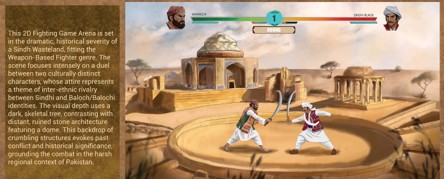
Fig.6. Student Game Arena Concept Art Inspired by a Sindh Landmark
In this sense, the studio enabled a creative practice that tested how cultural grounding, technological skills, and pedagogical structures intersect to create new forms of knowledge. The outcomes suggest that meaningful creation in game art and design does not emerge from cultural neutrality, but from situated engagement. By treating cultural specificity as a design methodology rather than a thematic limitation, the studio enabled students to imagine worlds that are not only visually distinct, but epistemically grounded.
Difference, Unlearning, and Creative Power
The pedagogical experiment described above demonstrates that cultural specificity, when structured as a design constraint, does not narrow creative possibility — it expands it. Students who engaged with their own situated knowledge produced work that was more formally inventive, emotionally invested, and ethically grounded than those who drew from globalised aesthetic references. This finding resonates with Paulo Freire’s (1970) understanding of education as a practice of critical consciousness: learning is not the passive absorption of established knowledge, but the active transformation of one’s relationship to the world through reflection and action. In this studio, the world students were reflecting on and acting through was their own cultural inheritance.
Local references — once treated as decorative gestures or nostalgic impulses — became legitimate sources of visual knowledge and narrative meaning. A grandmother’s courtyard became a game level. A folk villain from Punjabi oral tradition became a game character. The texture of monsoon-damp brick became an environment creator. In each case, the move was not backward into tradition but forward through it, using cultural memory as a generative design resource rather than a constraint to overcome.
This process of unlearning is especially important within postcolonial academic contexts, where creative subjects often laud external models as a baseline of excellence. Intersectional pedagogy, as demonstrated here, empowers students to imagine alternative futures — worlds in which plurality, care, and cultural specificity are fundamental design values rather than marginal concerns. The studio becomes, in this sense, not just a place of skill formation but a site of epistemic reclamation.
Serious Games, Ethics, and Situated Future
The major focus of game art and design discussions includes visuals, immersion, and entertainment value. ‘Serious games’ — defined within game studies as interactive works designed primarily for purposes beyond entertainment, including education, advocacy, training, and social behaviour change (Bogost, 2007; Flanagan, 2009) — represent a shift in orientation from consumption to responsibility. Within this piece of work, the design of serious games was approached as an ethical practice, one that accepts that interactive systems can shape behaviour, perception, and social imagination. When we situate these games in local cultural realities, they can be systems of care rather than abstractions. This happens through the specificity of cultural reference embedded in mechanics, characters, and narrative logic. When a game’s winning condition is not domination but redistribution and when its environments are drawn from real streets and social economies rather than generic fantasy worlds, players are invited into a relational understanding of action and consequence. The game does not abstract ethical problems into puzzles; it situates them within recognisable human contexts, making care a structural feature of gameplay rather than a thematic decoration.
In Pakistan, food waste, environmental degradation, and unsustainable urban practices represent pressing social and ecological challenges. Pakistan generates an estimated 36 million tonnes of solid waste annually, with food waste constituting a significant proportion (Papargyropoulou et al., 2014). These are not abstract global concerns — they are embedded in the everyday rhythms of Pakistani urban life. Making games about these issues requires more than global sustainability narratives; it calls for cultural, contextual, and ethical sensitivity. Intersectionality, in this way, becomes a guiding method for aligning ecological concerns with social behaviour, cultural memory, and visual storytelling.
These concerns are particularly acute in the informal urban economies of Pakistani cities, where cart-pushers, waste-pickers, and street vendors operate complex systems of redistribution and recycling that remain invisible in formal waste management frameworks. Situating a game within this economy is itself a representational act — an argument that these overlooked figures and their quiet ethics of care deserve to be the protagonists of interactive worlds.
I illustrate this approach through the development of a serious game concept centered on Sakhi — a character inspired by the street economies of Faisalabad’s older commercial districts.
‘Sakhi’ ( سخی ) is an Urdu and Punjabi word meaning ‘the generous one’ or ‘the giver,’ a name embedded in the Sufi tradition of charitable giving that runs through the cultural fabric of South Asian Muslim communities. The name is not incidental; it positions the character’s ethics at the intersection of cultural inheritance and contemporary environmental urgency. Sakhi is a humble cart-pusher who collects surplus food from the bazaars and dhabas of a Faisalabadi neighbourhood, distributing it to those experiencing food insecurity, and recycling organic waste through worm composting. Instead of rendering heroism in the scale of spectacle or power, the character embodies care, continuity, and quiet resistance, which are local values. Sakhi’s design draws from local costumes, street economies, and community rituals, situating the game’s ethical framework within familiar cultural codes.
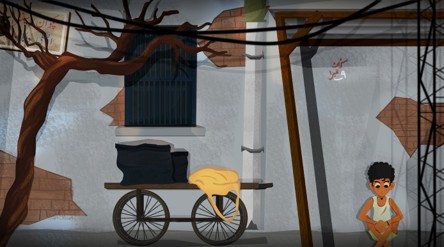
Fig. 7. Sakhi’s Game Backstory Comic Visual
This game concept includes mechanics based on ethical awareness rather than on competition. The choice to – food wastage and ecological responsibility in the Sakhi game concept is not arbitrary. Activities like gathering leftover food, moving through cities, engaging with mechanics of recycling, are organized in such a way as to foster a sense of balance, care, and consequence. Failure is not punished through loss alone but through visible social and ecological impact. The way these mechanics operate, gameplay is experienced as a relational system, where decisions reverberate far beyond the player’s immediate goal.
Design choices present ethics out front as a part of interaction. They contrast the codes of efficiency and accumulation that reign in many games with cycles of responsibility and attentiveness. This connects with bigger intersectional issues, highlighting how some forms of action become privileged while others become marginalized, and how design can help reinforce or disrupt that.
Embedding ethical narratives into culturally situated characters and mechanics may make serious games more reflective than instruction. They do not dictate moral outcomes but enable players to inhabit systems shaped by scarcity and interdependence. By doing this, they broaden the definition of game design from representation to ethical participation.
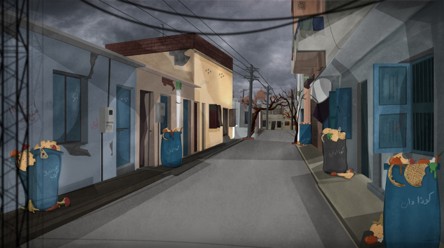
Fig. 8. Backstory Visual Illustrating Food waste
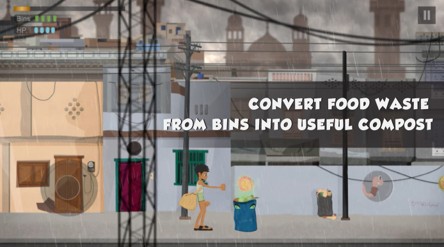
Fig. 9. Gameplay Prototype Interface (Screen 1)
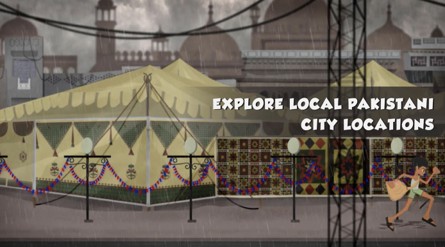
Fig. 10. Gameplay Prototype Interface (Screen 2)
Conclusion
Reestablishing local presence within digital games is not a practice of nostalgia but an epistemic and aesthetic intervention. When folklore encounters modern industry standard software, when architecture encounters reflective game concept art, and when pedagogy encounters intersectionality, new worlds become possible worlds built on cultural memory, situated knowledge, and the generative possibilities of the in-between. By adopting intersectionality as a creative method, this work contributes to wider conversations on pluriversal futures in game design and pedagogy. It argues for practices that do not minimize differences in the pursuit of universality, but instead create newer worlds through differences, enabling multiple worlds to coexist and speak across contexts.
Acknowledgments
I wanted to gratefully acknowledges the students of the Bachelor of Animation & Multimedia Design program at the National Textile University, Faisalabad, particularly Hamsa Ehsan, Mehnoor Fatima, and Maheen Tahir Shah for granting permission to reproduce selected artworks developed under my supervision. Their creative contributions were integral to the pedagogical reflections presented in this study.
References:
01. Anzaldúa, G. (1987). Borderlands/La Frontera: The New Mestiza. Aunt Lute
02. Barab, , Thomas, M., Dodge, T., Carteaux, R., & Tuzun, H. (2005). Making learning fun: Quest Atlantis, a game without guns. Educational Technology Research and Development, 53(1), 86–107. https://doi.org/10.1007/978-3-7091-1142-0_20
03. Baldwin, G. (Director). (2014). Just Eat It: A Food Waste Story [Documentary film].
04. Bogost, I. (2007). Persuasive Games: The Expressive Power of Videogames. MIT Press. https://doi.org/10.7551/mitpress/5334.001.0001
05. Crenshaw, K. (1989). Demarginalizing the intersection of race and sex. University of Chicago Legal Forum, 1989(1), 139–167.
06. Crenshaw, K. (1991). Mapping the margins: Intersectionality, identity politics, and violence against women of colour. Stanford Law Review, 43(6), 1241–1299.
07. Escobar, (2018). Designs for the Pluriverse. Duke University Press. https:// doi.org/10.1215/9780822371816
08. (1997). Hercules [Video game]. Disney Interactive.
09. Flanagan, (2009). Critical Play: Radical Game Design. MIT Press.
10. Freire, (1970). Pedagogy of the Oppressed. Continuum.
11. Haraway, D. (1988). Situated knowledges: The science question in feminism and the Privilege of partial Feminist Studies, 14(3), 575–599. https://doi.org/10.2307/3178066
12. Hooks, (1994). Teaching to Transgress: Education as the Practice of Freedom. Routledge.
13. Infinity (2003). Call of Duty [Video game]. Activision.
14. Lorde, (1984). Sister Outsider. Crossing Press.
15. Murray, J. (1997). Hamlet on the Holodeck: The Future of Narrative in MIT Press.
16. (2020). Genshin Impact [Video game]. miHoYo.
17. (1994). Tekken [Video game]. Namco.
18. Papargyropoulou, E., Lozano, R., Steinberger, J., Wright, N., & bin Ujang, Z. (2014).
19. The food waste hierarchy as a framework for the management of food surplus and food Journal of Cleaner Production, 76, 106–115. https://doi.org/10.1016/j.jclepro.2014.04.020
20. Riot (2009). League of Legends [Video game]. Riot Games.
21. Salen, K., & Zimmerman, E. (2004). Rules of Play: Game Design Fundamentals. MIT Press.
22. Schön, (1983). The Reflective Practitioner. Basic Books.
23. (2014). Far Cry 4 [Video game]. Ubisoft Montreal.
24. Virgin (1994). Aladdin [Video game]. Sega/Virgin Games.