
Abstract: In a world where identity is often shaped by culture and places, the anonymity of the digital space of the internet, free of biases tied to form, gender, and position can perhaps be looked as a space holding pockets that provide the possibility to interact, mediate, and build with impartiality to biases embedded in our physical spaces. While culture defines identity, it can also augment limitations, emphasised by social or geographical structures.
Massively Multiplayer Online Role Playing Games (MMORPGs) present such digital spaces, where one can transpose a new identity upon oneself by recreating one’s form into the denizens of the game, and be allowed to carve a niche based on one’s skill, perseverance and amount of time. With the structure of the world defined by the game’s design, an individual’s worth and purpose is often defined by expertise and versatility of skill sets. The diversity in the character can perhaps be taken analogous to the real life polymath, however in the online space the acquisition of these competences might be more accessible.
This research shall explore the idea of a polymath in the virtual artificial worlds and social structures in a space where the divides of age, social status, culture, and geographical boundaries are nullified. In a space where normal agencies of power are removed, power and strength granted from one’s knowledge and skill, the mastery of multiple crafts can turn to be the means of forging a new power structure.
Keywords: MMORPG, Online Polymathy, Skill Trees, Power and Knowledge
Culture and Identity
As multiple cultures evolve from regions of their geographical boundaries giving birth to varied lifestyles and schools of thought, local wisdom, and indigenous knowledge are considered valuable resources that could aid in providing solutions addressing issues related to identity, belonging, and care. Native traditions have the potential of guarding wisdom that holds answers that have been passed over the ages, answers which we may have forgotten or ignored in today’s post-colonial homogenised narratives. The stories passed down through the ages are often born from the clime and lay of the land they originate from, and therefore hold elements that can lead to more sustainable solutions that would hold greater resonance with the people they belong to.
Cultural variance could be considered the key to defining our identity, aiding us in marking ourselves as unique individuals with his/her/their own set of interests and expertises. However, it is the same culture that can serve as a bane to defining our individuality with definitions of locales, genders, and age come along predisposed opinions that we as people have the tendency to fall back upon. As Amin Malouf (2003) writes in his essay ‘In the Name of Identity’, in our rush to place people and experiences into digestible boxes, we tend to ignore the complexities of the human persona, achieved from the experiences of living and absorption of knowledge.
Our decisions aid in defining our interests and guide the paths we pursue in life. While culture, religious alignment, and gender no doubt hold roles in the direction of our decisions, ultimately, that which separates ourselves as an individual from a mass persona that we tend to attribute to groups within society are our choices. From the people we choose to walk with, the languages we learn, the interests we develop, to the foods we like, all these aid in shaping our personality and interests, and may be what sets the direction on the knowledge path we choose to walk upon. These specific choices aid in moulding a unique identity that possesses the potential to leave an impact upon society.
Polymathy and Society
Deeply tied to the complexities of the development of an individual personality is the acquisition of skills. Our inclinations influence our learning choices, which then shape our life decisions and career paths. The human brain has the capacity to absorb a variety of information, demonstrated in our ability to adapt to myriads of situations, reflecting our ability to develop expertise in multiple fields simultaneously. In the formative years, when experimentation is encouraged, children can be seen easily picking up multiple skill sets.
The state of being adept in multiple domains of knowledge, excelling in diverse disciplines is what is termed as polymathy, a term often attributed to some of the well known masters of history. However, in recent years, polymaths are claimed to be rare to find, with specialisation in one area being encouraged over others. Research indicates that this inclination may be attributed to the social and educational system, encouraged by the thought that adeptness in multiple areas leads to mastery in none, leading to an individual, in the words of Carl Djerassi, who is more of a ’dabbler’ (Garcia-Vega & Walsh, 2018).
With a part of the development of our skills being tied to the social matrix, the prevailing norms and expectations in society are often influencers upon the decisions of many, discouraging brave experimental actions that deviate from the norm due to risk elements. With the mastery of a skill being tied to the amount of time invested in the process, polymathy is often discouraged for not being able to cover the range of knowledge that is available today.
Simultaneously, a wider range of specialisation leads to a greater chance of excelling in any field a person is placed in, being equipped to adapt to situations that fall outside the expected or come up with newer, unconventional solutions (Epstein, 2019). With various skill fields constantly evolving and changing, over reliance on specialisation can potentially lead to expertise being outdated, or resolved by someone who might be able to apply knowledge from unrelated frameworks.
Power in Knowledge
The possession of knowledge itself can be equated to command over power. Mastery in a field enables one to create, effect, and guide in that particular framework. This power holds the ability to influence others, shape opinions, and reinforce existing concepts. However, if we are to follow Foucault’s (1981) theory on the link between power and knowledge, not all information and skills are equal. There are some that hold greater favour for they may aid in reinforcing the popular discourse and opinion. Those skills or knowledge sets which fit in the broader social and economic relationships in society might be given greater respect, as their existence would serve to reinforce the broader narrative.
Finally, it could be said the main influencer and dominator in the development of our skill sets is the society in which we are based, with its opinions, needs, and inclinations influenced by the culture and existing power structures. In such a scenario, the digital space emerges as an alternative third space, providing a platform entailing people from culturally diverse backgrounds but separated from the geographical bounds of their physical space. The boundless virtual realm’s open and participatory nature enables decisions that transcend the boundaries of pre-established powers and traditions. The immaterial nature of the internet prioritises information as its core currency, leading to the emergence of a new network based society.
Due to the nonphysical nature of digital space, some of the respect and power rules, which are associated with the nature of acquisition of knowledge are automatically overturned. Whereas in our physical spaces we might equate the quest for knowledge and expertise with age and accumulated experience, in the online space, it is only those who demonstrate skill and knowledge who are awarded the due respect and reverence, regardless of age. This overturning of norms leads to a new fluid social economy, allowing for emergence of novel power structures and identities. Anonymity of gender, age, and location allows bypassing limitations on learning and roles, enabling equal opportunities.
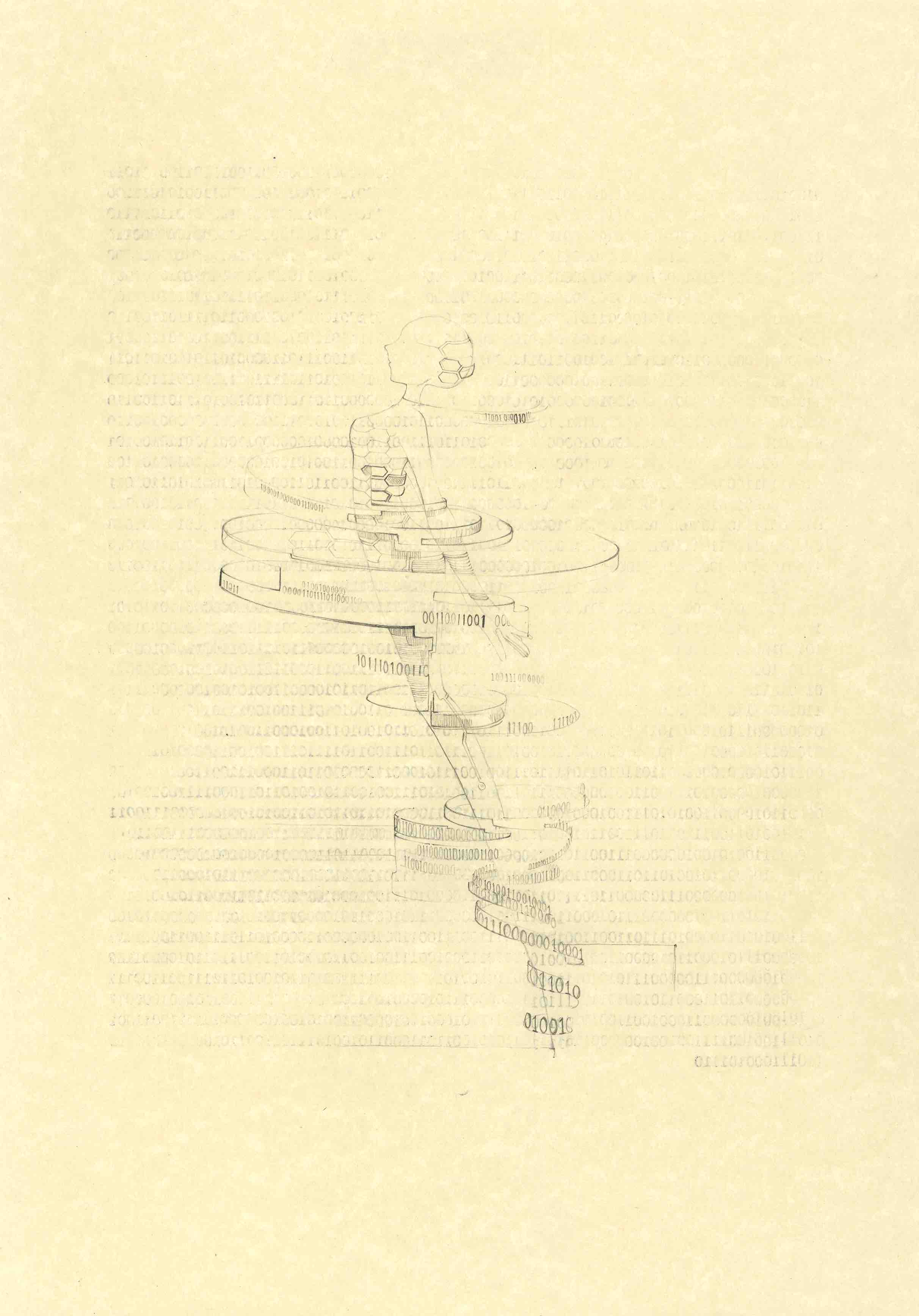
Fig. 01. Choose your Character
The Internet as a Culture Neutral Space
At the same time, the intangible nature of the digital space is not without its challenges. As Dreyfus (2009) critiques, due to the disembodied nature of the Internet, issues of commitment and human connection are a concern. Their study specifies that as humans we tie value to embodied experiences, something which the digital space lacks, leading to a greater risk factor in allotting trust. A space gains value from its inhabitants’ relationships, fostering community, belonging, and personal investment. The ability to easily disconnect and walk away from one’s actions erodes attachment and accountability, undermining genuine community or intellectual engagement.
This lack of physical interaction does often lead to a lack of emotional engagement, leading to fragility in relationships and inability to commit. Dreyfus (2009) compares this to Kierkegaard’s (2009) critique of the press, drawing a comparison that the simulated nature of the digital space eliminates risk. With the user on the other end being reduced to data, a greater detachment is created.
Consequently, the same disembodiment holds the advantage of serving as a neutral space for democratising information, allowing open access, and empowering all those who seek the knowledge, as contested by Swartz (2008) in his fight for making all data open access. Providing a space where geographical confines are negated, the social and institutional barriers, taking root from the natural political and corporate restrictions that affect our physical interactions, can be easily bypassed. Additionally, the safety provided by distance and anonymity can alternatively pose as a boon for communication and bonding, especially for individuals that find discomfort in physical interactions.
In such cases, online social worlds using play, cooperation, and narrative building could bridge gaps and deepen user engagement. Software programs such as LambdaMOO have shown the potential of these virtual realities that can serve as platforms which foster communities (Pavel, 1992). An evolution of the earlier MUD (Multi-User Dungeon) online games, this text based multiplayer virtual world, built using the MOO programming language provided user interactivity with the online space, took upon the form of a mansion allowing the players to communicate publicly and privately, providing them access to ‘rooms’ and ‘objects’ that they could manipulate using the embedded programming language in the ‘game’. With an open nature that relied on the primary medium of communication, it became a hub for global interaction, serving as a space for role-play and uniting communities in addressing complex social issues in virtual space.
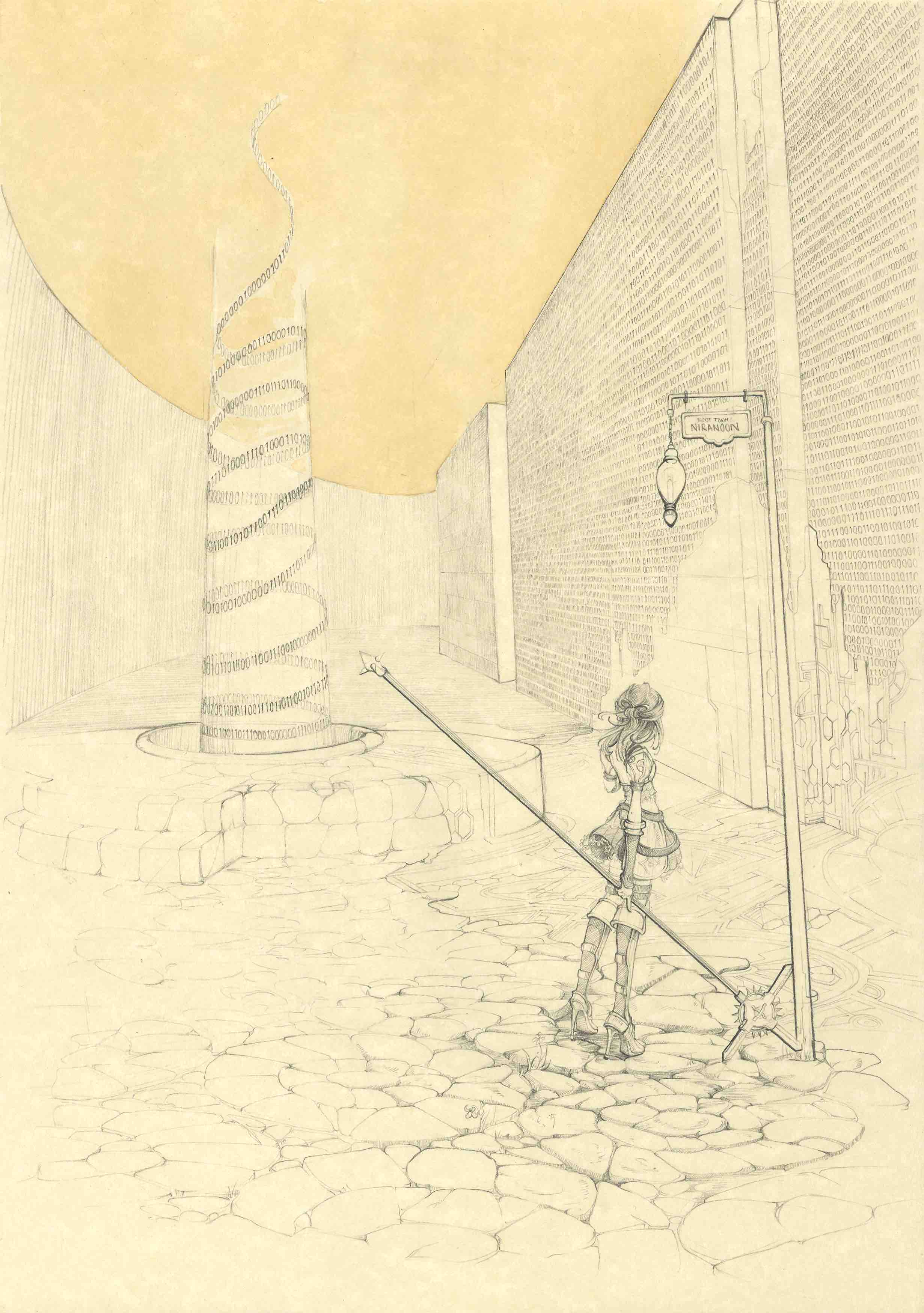
Fig. 02. World Creation
The World of Digital Fantasy
The Massively Multiplayer Online Role Playing Game (MMORPG), building upon the foundations of persistent virtual worlds laid by MUDs, took the concept of a multiplayer game space further by adding in a visual interface to the element of communal storytelling and world building. The game’s interface potentially serves as a recreation of the physical world, by providing visual imitations of our existing natural and urban spaces, recreated in polygons and data.
These online game spaces, in contrast to their single player and local network counterparts, are vast online worlds which exist independent of human interaction. Whereas in a stand-alone offline or local network game space the existence of the created digital world depends upon the player logging and switching on the game, otherwise remaining in a state of paused stasis. The online MMORPG exists in an autonomous online space with its timeline and events running even when the player is logged out. With thousands of players playing simultaneously, in their own level areas and conducting activities of interest, these games can be played either with other groups of people or alone. Conducting trade, forging weapons, questing deep into a grand dungeon thousands of levels deep or choosing to grow potatoes with your virtual partner who you might never meet in real life (nor might hold the gender their online counterparts depicts), the undefined and malleable narratives in these virtual constructs resemble the unplanned events of real life in comparison to the defined and controlled form of offline games.
With the graphical environments providing a visual structure to the digital space turning the online navigation space into an emulation of our physical reality (albeit fantastical) through the creation of towns, fields, and dungeons through which the players navigate, online games’ immersive configurations can function as parallel societies. Through cooperative, multiplayer design and immersive environments, players adopt mimicries of real-world social behaviours, setting up clans and groups that mirror offline community building (Gürel, 2021).
As the game structure provides a certain amount of customisation upon the creation of a character in the form of visual look and power attributes (such as strength, wisdom, speed) through point allocation (‘stats’) that aid in defining tendencies and alignment towards certain arts over other, players are able to form identities which may be distinct from their real world personalities. This adoption of varied physical identities, can allow the player to further substitute themselves from their real world counterparts, taking up opposite genders, physical abilities, and even races. However, while the digital space allows a certain amount of freedom, it is not possible to entirely separate ourselves from existing biases and needs which we have formed in our physical spaces (Miklos et al., 2022).
Power Structures
One such bias is the dependency of knowledge, echoing the existence of the physical world power structures. If we were to compare real life knowledge acquisition and skill building to the skill trees in MMORPGs, we can observe biases towards specific ‘builds’ – choices of attributes, skills, equipment and play styles that dictate the specialisations of characters. In most games, the player may choose a certain path of specialisation, the options often offered between a physical power dependent form, a magic or spiritual power specialist, defence based, or those that serve as support to others rather than excelling in one’s own power. If some programming inclinations within the game world favour a specific specialisation having advantages over the other, in a situation similar to Foucault’s (1981) argument regarding the value of knowledge being shaped by the current power structure, there will be greater penchant for the people to pick that path.
By observing this predisposition formed from the structure of the world and the players’ tendencies towards populist routes, comparisons can be drawn between the picking of a ‘job class’ (occupational roles such as the melee Warrior, healing support Cleric, the dexterous Thief, amongst many others) and ‘skill specialisation’ (specialisation routes which allows learning specific sets of skills in your chosen job) in MMORPGs to the politics of acquiring knowledge in the real world. With the acquisition of knowledge not being an entirely neutral occurrence but being defined by the needs of the épistémè (Foucault, 2012), the dominant paradigm that can encourage or discourage the pursuit of certain knowledge areas, parallels can be drawn with specific skills or job classes in MMORPGs not being favoured by the current game world build or ‘meta’ (the unofficial rules for optimal performance defined by the players for the current state of the game).
Characters that have greater strength have the tendency to be favoured, holding the ability to not only support themselves but also those around them. Possessing power eases travelling, questing, and acquiring latter ‘endgame’ rewards – where the player’s acquired knowledge replaces skill building (‘level up’), unlocking greater rewards of wealth and discovery. Conversely, players choosing builds that require support when levelling up tend to seek aid from stronger allies, paralleling physical world collaboration dynamics. This ability to self-sustain and support often comes from the possession of variance in skill sets, the greater the variety of abilities, the lesser chances of reliance upon another. Combination of multiple job classes can lead to augmentation of the primary specialisation.
Final Fantasy XI is one such online space which has served as a model for many other MMORPGs with it’s dual job system, allowing the players to specialise in multiple jobs which built upon the advantages of their innate tendencies, i.e. magic power, strength, speed, while also expanding the game mechanics to include non-combat roles which allowed taking up social and economy affecting tasks. Combinations such as White Mage, a healing support class, and Black Mage, magic power based high damage dealer, are favoured. Allowing one to optimise and reap the greatest rewards on the battlefield from one’s high Intelligence and Wisdom stat, this combination of specialisations is powerful while at the same time self sustaining. Alternatively, a Monk might not wield similar explosive power on the field, but wielding greater Vitality and Strength, they could earn more success in the marketplace with the amount of resources they could sell from side jobs of Mining and Logging.
Solving multiple problems by oneself leads to easier resolutions, allowing one to fine tune the solution according to one’s liking. While the specialist holds great value in a party for their stellar support in a single field, careful combinations of certain specialisations can lead to greater independence. The generalist who combines skill sets from diverse jobs has the potential for unlocking newer avenues in gameplay, which could be the answer to disrupting the established restraints, virtual world equivalents of Foucault’s (1981) regimes of truth.
Virtual Polymaths
The versatility of adopting multiple skill tree paths in the online virtual worlds of MMORPGs can be found as a parallel to real world polymathy. Similar to real-life counterparts, the virtual polymaths have advantage of greater self-sustainability and unlocking alternative solutions outside the bounds of established knowledge systems. However, where ‘polymathy’ in the virtual game space differs is in the element of risk. Online character progression, driven by numerical systems (e.g., experience points from completing tasks) mirrors our physical quest for knowledge and acquisition of skill. It is only when we read and practice, do we acquire expertise in the chosen art. Unlike the physical space though, the gain in the virtual world is more easily quantifiable and graspable, as we see the character rewarded with skills almost in the form of a trophy verifying that the knowledge has been acquired and will not be lost unless faced by memory loss.
This ease in the acquisition of knowledge in the game space is what might set the digital society apart from the physical world. Faster gratification and quantification of results in a form that is tangible can result in greater value for the multi-specialist online player versus the physical polymath, whose variance in abilities leads to skepticism over their ability to excel in any one area (Adcock et al., 2011). In the physical space, the acquisition of any one ability requires years of application to a task and memorisation of either actions or information, leading to doubts of mastery held by a polymath.
However, in virtual worlds, it’s common for characters to master multiple skills or professions; if the game system permits because these games are designed to reward repeated short-term tasks. These tasks are often quick to complete, allowing players to rapidly improve their skills with relatively little time investment (Clark et al., 2016).
Natural talent and years of application play a lesser role in the game space, instead strategic stat location, time and fund investment in acquiring the suitable skills and equipment play a greater role in reaching mastery. Therefore, in online gaming, expertise is not determined by age; a five-year-old could be just as skilled, or even more so, than a fifty-year-old, and thus be better suited to lead. Mastery of game mechanics and in-depth knowledge of the virtual world often define leadership, overturning traditional age-based hierarchies and challenging assumptions about seniority and authority by prioritising competence over age (Yee, 2006).
Cooperation and Interdependence
Due to the extremely social nature of MMORPGs, the online multiplayer game space has an innate bias towards cooperative play and development. The system encourages interactions, teamwork and development of relationships, which in turn, also creates dependency through the power dynamics of specialisation.
The basic job classes and skill sets that are offered can be distilled into three broad form sets – attack, defence, and support. With the power dominant, attack oriented classes leading the action from the front, they enjoy greater independence in decision as compared to the support classes, who provide sustenance to others, often at the sacrifice of their own wellbeing. A support character often cannot self-sustain, making them dependent on group play and reliant on having acquired a social circle.
Dependency reinforced established power structures, in this case the parameters of the virtual world set by the developers. In a MMORPG adopting a free-to-play structure this dependency might be abused by introducing ‘Cash Shops’ which uses real world currency to buy power-enhancing items that potentially create imbalance.
This is evidenced in games such as Elsword and Genshin Impact which provided the alternative of acquiring faster results through items bought through a ‘gacha’ lottery that brought the players greater advantage (Jėčius & Alexander Frestadius, 2022). Richard M. Emerson’s (1962) Power Dependence theory notes that power is not inherently one sided, the need of one party for the resources the other provides creates a system of interdependence. However, when one party holds a greater influence over another, imbalance takes place, which opens the grounds for exploitation.
Breaking free from the social constraints of dependence designed within the game system through self-sustainability may aid in negating the asymmetry of power dynamics, leading to greater preference in online polymathy, or multiple mastery of the skill tree (Zhu et al., 2022). However, this assertion of skill based self-perpetuating dominance also aids in-turn skewing the social power structure, with such players enjoying greater popularity.Due to the level of invincibility the acquisition of multiple skill sets might provide a person, it is inevitable that such an individual will be sought after by others. One who can adventure solo through the dungeons by themselves would also be seen as more than capable to ‘carry’ (the act of aiding another in levelling up) another along with them – their skilful form serving as a shield to the weaker people who might flock to them.
Mastery over the game system is not necessarily only through proficiency of the in-game skill trees. Breaking the invisible wall between the physical and digital realms, due to the crafted man-made nature of the virtual game world, a certain level of predictability exists from the programmed structure. This leads to the potential of the world structure being studied and space for a group of specialists to arise who might not necessarily possess in-game skills, the literal physical power and strength to lead, but can turn into brokers of information which can allow people to bypass the confines of the world. This form of information varies according to the setup of the game world. It can deal with availability of items in shops, special deals that might appear in certain seasons, or even appearance or ‘spawn’ rates of the enemies (‘mobs’) in dungeons.
With visual appearance being fluid in the MMORPG space and players being able to take up appearances that might not be reflective of their real age, the social dynamics of the real world that might either give an advantage or give a disadvantage are masked. Therefore, when someone is admired for their skill and sought after as a partner due to their adeptness in multiple arts, unlike the real world, age, gender, and space have no role in affecting these decisions. The reverence of an online polymath is often separated from physical factors, and only the skill is the element used to quantify the worth of a person.
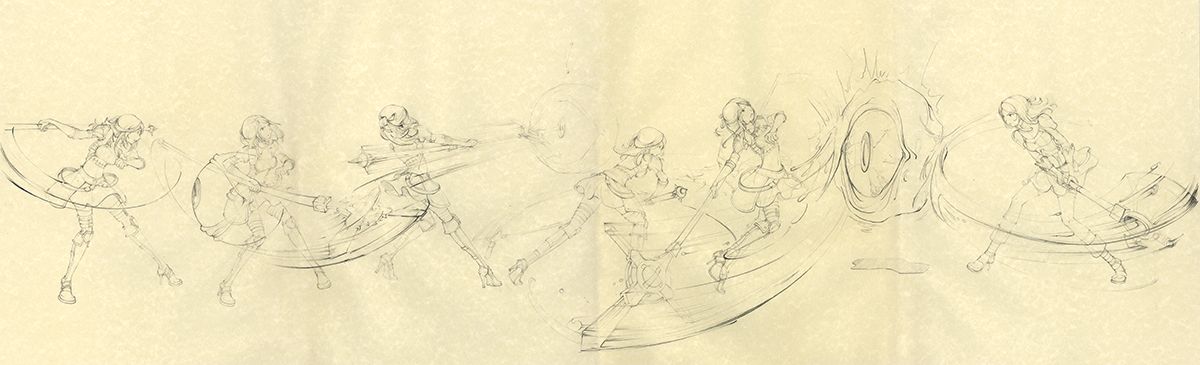
Fig. 03. From Squire to Knight
Risk and Freedom
Ultimately, knowledge, whether in the online space or the offline, empowers individuals, allowing the possessor greater agency to follow a path of their own dictation. Where the online space excels is the ease in acquisition of these skill sets, with the pathway of learning clearly defined by the programming, avoiding the element of risk that is prevalent in the physical world. With the outcome not set in stone, nor with the element of ‘redo’ embedded in the transient nature of virtual worlds, it is more likely that the learner would follow a path predetermined by society that ensures success.
Kierkegaard (2014) describes it as anxiety rooted in the possibility of possibility born from freedom. Calling the anxiety the ‘dizziness of freedom’, it is the element of risk that arises when multiple choices are presented, the choice of one seemingly blocking off access to the other. Polymathy, in this regard, requires greater investment and with uncertain returns, as dictated by the current academic setups where skills are acquired (Root-Bernstein & Root-Bernstein, 2011).
With virtual reality being divorced from the stakes that inhibit our actions in physical spaces, with its culture neutral, ‘no stakes’ nature, it has potential for serving as test grounds for learning. The task based programmed nature of the space allows users to visualise their actions with greater action. Therefore, there is potential in exploring the online game space as breeding grounds for polymathy. LambdaMOO (Pavel, 1992) demonstrated the success of such space precisely because its disembodied, text-based nature encouraged experimentation. Divorced from physical constraints, identity, social interaction, and governance were explored without fear of real world repercussions. In this regard, the constructivist nature of LambdaMOO served as risk free playgrounds allowing the players to build their own content through programming, becoming grounds for self-directed learning and polymathic development.
Conclusion
The development of skill and knowledge building is intrinsically linked to the presence of power, either serving as a means to achieve a certain plane of acceptance or reinforcing existing structures. In our world, wisdom is often synonymous with age and mastery over a craft, and respect is earned from the level of expertise one wields over their speciality. While the online space serves as a perfect neutral ground which can potentially free us from the preset defines of our geographically bound cultures, the experiences we carry within us still colour our actions and therefore affect the state of these neutral spaces.
However, due to the innate nature of virtual reality and MMORPGs that divorces us from the natural talents and tendencies of our physical forms, the online game space provides a platform where everyone has an equal chance of development, regardless of age or aptitude. With the process of acquisition of knowledge functioning on a different measurement of time and effort, development and mastery of multiple skill sets can be achieved with greater ease. Ultimately, the self-sufficiency and independence acquired from polymathy, which might be easier to achieve in an online space, empowers the player and allows them to open greater avenues for exploration and mastery.
Amna Hashmi
COMSATS University Islamabad
Amna Hashmi’s research focuses upon the linkages between illuminated manuscripts and Japanese manga, particularly in storytelling, myths, folklore, and the creation of magical, collective imaginary spaces in modern digital contexts. Recent works have been shown at He Yuan Peace Garden Museum (2017), Tsinghua University Art Museum (2020), and as Pak Khawateen Painting Club at Lahore Biennale 02 (2020), Jameel Art (2022), and Sharjah Biennale ’15 (2023). Hashmi is currently an Assistant Professor at the Department of Art and Design at COMSATS University, Islamabad.
References
Adcock, A. B., Watson, G. S., Morrison, G. R., & Belfore, L. A. (2011). Effective Knowledge Development in Game-Based Learning Environments: Considering Research in Cognitive Processes and Simulation Design. In I. R. Management Association (Ed.), Gaming and Simulations: Concepts, Methodologies, Tools and Applications (pp. 409–425). IGI Global. https://doi.org/10.4018/978-1-60960-195-9
Clark, D. B., Tanner-Smith, E. E., & Killingsworth, S. S. (2016). Digital Games, Design, and Learning: A Systematic Review and Meta-Analysis. Review of Educational Research, 86(1), 79–122. https://doi.org/10.3102/0034654315582065
Dreyfus, H. L. (2009). On the internet (2nd ed). Routledge.
Emerson, R. M. (1962). Power-Dependence Relations. American
Sociological Review, 27(1), 31. https://doi.org/10.2307/2089716
Epstein, D. J. (2019). Range: Why Generalists Triumph in a Specialized World. Penguin Publishing Group.
Foucault, M. (1981). Power / knowledge: selected interviews and other writings 1972 – 1977 (C. Gordon, Ed.). Pantheon Books.
Foucault, M. (2012). The Order of Things: An Archaeology of
Human Sciences. Knopf Doubleday Publishing Group.
Garcia-Vega, C., & Walsh, V. (2018). Polymathy: The Resurrection of Renaissance Man and the Renaissance Brain. In R. E.
Jung & O. Vartanian (Eds.), The Cambridge Handbook of the Neuroscience of Creativity (1st ed., pp. 528–539). Cambridge University Press. https://doi.org/10.1017/9781316556238.031
Gürel, R. (2021, August 12). MMORPG Games as a Way of Coping During the Pandemic: A Study on World of Warcraft. The Barcelona Conference on Arts, Media & Culture 2021 Official Conference Proceedings.
BAMC2021, Barcelona, SpainIAFOR. https://papers.iafor.org/wp-content/uploads/papers/bamc2021/BAMC2021_61237.pdf
Jėčius, D. & Alexander Frestadius. (2022). How do players experience a gacha game depending on their perspective as a starting or a veteran player?: A case study of Genshin Impact [Thesis, Uppsala University]. https://www.diva-portal.org/smash/get/diva2:1669147/FULLTEXT01.pdf
Kierkegaard, S., Hong, H. V., & Hong, E. (2009). Kierkegaard’s writings, XIV: Two Ages: The Age of Revolution and the Present Age: a literary review. Princeton University Press.
Kierkegaard, S. (with Hannay, A.). (2014). The Concept of Anxiety: a Simple Psychologically Oriented Deliberation in View of the Dogmatic Problem of Hereditary Sin (1st ed). Liveright Publishing Corporation.
Lim, N. (2024, November 19). How Gaming Psychology Shapes Our Behavior [Blog]. Sonamine. https://www.sonamine.com/blog/how-gaming-psychology-shapes-our-behavior
Maalouf, A., & Bray, B. (2003). In the name of identity: violence and the need to belong (Repr). Penguin.
Pavel, C. (1992, January 8). Mudding: Social Phenomena in Text-Based Virtual Realities. Proceedings of Directions and Implications of Advanced Computing (DIAC’92) Symposium. People, Computers, & Design, Berkeley, California.
Root-Bernstein, R., & Root-Bernstein, M. (2011). Life Stages of Creativity. In Encyclopedia of Creativity (pp. 47–55). Elsevier. https://doi.org/10.1016/B978-0-12-375038-9.00135-7
Swartz, A. (2008). Guerilla Open Access Manifesto [Archive]. The Internet Archive. https://archive.org/details/GuerillaOpenAccessManifesto
Yee, N. (2006). The Demographics, Motivations, and Derived Experiences of Users of Massively Multi-User Online Graphical Environments. Presence: Teleoperators and Virtual Environments, 15(3), 309–329. https://doi.org/10.1162/pres.15.3.309
Zhu, Z., Zhang, R., & Qin, Y. (2022). Toxicity and prosocial behaviors in massively multiplayer online games: The role of mutual dependence, power, and passion. Journal of Computer-Mediated Communication, 27(6), zmac017. https://doi.org/10.1093/jcmc/zmac017allowing the players to build their own content through programming, becoming grounds for self-directed learning and polymathic development.