

Johannesburg’s mine dumps, located in Soweto, southwest of central Johannesburg in Gauteng, South Africa are among the most extensive artificial landforms in the Southern Hemisphere. Composed of crushed rock, tailings, and chemically altered soils, these vast accumulations materialise the extractive legacies of colonialism, even as they are normalised within the contemporary urban landscapes as scenic backdrops.
Yet to stand on these terrains is to encounter a different temporal register: one in which extraction has not ended but continues to unfold materially through dust, toxicity, erosion, and chemical interaction. This paper approaches these landscapes as active material formations.
The mine dump is not terra firma- a stable foundation upon which narratives may be projected- but relational ground; a dynamic field of intersecting forces that metabolise the afterlives of extraction (Krzywoszynska & Marchesi, 2020). This perspective also aligns with emerging discussions in material activism, where matter is understood as an active participant in political and ecological processes (Coole & Frost, 2010; Bennett, 2010; Davis & Turpin, 2015).
Such terrains resist singular disciplinary capture. Environmental science can measure contamination; history can trace colonial economies; urban studies can map spatial injustice. Yet none of these perspectives alone can account for how extraction continues to operate materially, sensorially, and temporally within the soil. What is required instead are methodologies capable of engaging complexity, uncertainty, and transformation as conditions of knowledge. Artistic research offers such an approach, not as illustration, but as inquiry (Borgdorff, 2012).
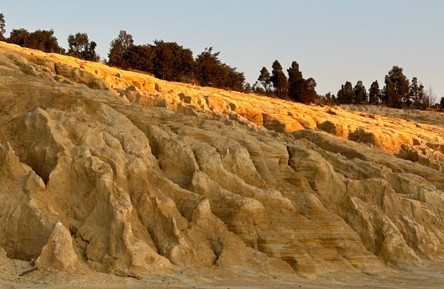
Figure 1. View from Soweto Mine Dump
The Mine Dump as an Ongoing Condition
In 2025, as part of the New Futures Artist Residency, an international programme dedicated to artistic research on extraction, a site visit was undertaken to the mine dumps bordering Soweto. The ground here is visibly stratified: pale yellow horizontal faces cut by fissures and erosion channels, their surfaces powdery yet compacted, registering uneven density and ongoing material movement.
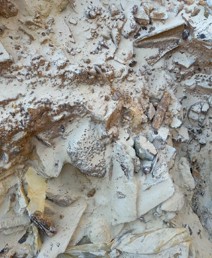
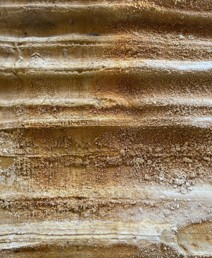
Figure 2. Crushed rock and tailings
Figure 3. Yellow horizontal faces
Vegetation has been introduced to attempt stabilisation, but roots frequently lie exposed, failing to bind the artificial soil. Wind, water, and gravity continue to reshape the landform daily.
What distinguishes prolonged exposure to these sites is their impact on human health. Respiratory discomfort, a toxic taste in the air, and heat radiating from the exposed surfaces of the mine dumps have made the site’s toxicity physically perceptible. During site visits, protective measures such as wearing masks, limiting time spent on-site, and covering exposed skin were necessary to reduce direct exposure.
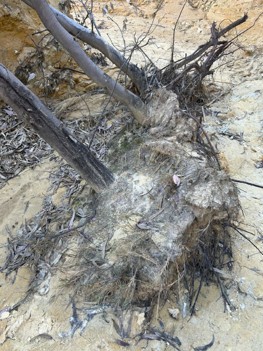
Figure 4. Fallen Tree with exposed roots at Soweto
Crucially, the mine dump announces itself not simply as a landscape, but as chemical mass. Crushed rock and tailings interact continuously with air, water, and biological matter, producing transformations that extend far beyond the moment of extraction (Bennett, 2010). Heavy metals oxidise, migrate, and reconfigure; soils leach and compact; microbial life is disrupted or suppressed. The mine dump thus operates as a slow-moving system, where extraction persists as an environmental process rather than a historical event.
This recognition carries methodological consequences. Knowledge of extraction landscapes cannot be produced solely through detached observation or analytical measurement. It demands forms of engagement that are situated, processual, and responsive to material behaviour (Haraway, 1988).
Reading the Ground from Above
Satellite imagery offers one register of understanding. Google Earth reveals the mine dumps as pale, linear scars tracing Johannesburg’s former mining belt; an aerial archive of extraction etched into the city’s fabric. From above, these formations read as infrastructural residues, their scale and alignment legible within broader urban systems.
Yet this synoptic view flattens material difference. Toxicity, chemical stress, and biological absence remain invisible at this distance. The ground’s internal dynamics, its ongoing reactions, require a different mode of attention, one that works with the soil rather than merely observing it.
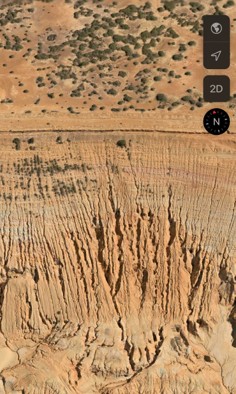
Figure 5. Satellite Imagery of Soweto from Google Earth
Soil Chromatography: Making Material Processes Visible
The primary method employed in this artistic research is soil chromatography, a chemical imaging process in which compounds extracted from soil are separated through capillary action on treated filter paper, generating visual patterns that reflect variations in mineral and chemical composition.
Soil samples were collected from nine different locations across Johannesburg’s extraction landscapes. The imaging process involves drying and sieving the soil before extracting it in a sodium hydroxide solution. The resulting extract is then drawn through silver nitrate–treated filter paper by means of a central wick and capillary action, separating the soil’s soluble compounds into distinctive visual patterns. As the paper dries and is exposed to light, characteristic patterns and colours emerge.
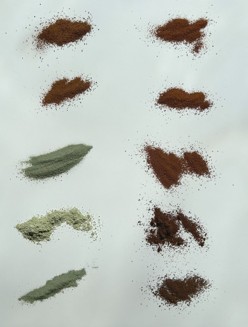
Figure 6. Different Soil Samples from the Site
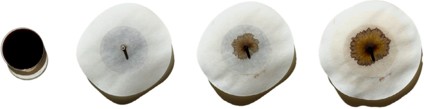
Figure 7. Capillary action of the soil extract
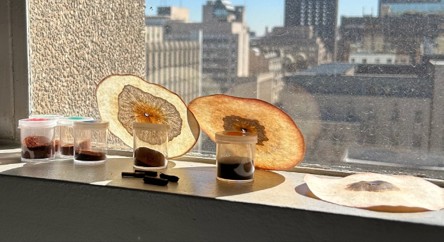
Figure 8. Chromatograms developing with the sunlight
These chromatograms are not treated as scientific diagnostics. They do not quantify contamination or produce measurable data. Instead, they function as material translations: visual events through which the soil’s internal dynamics become perceptible. The resulting images emphasize variability, sensitivity, and material instability rather than precision or control.
Methodologically, soil chromatography occupies a transdisciplinary space. It draws upon chemical processes without adopting scientific explanation, and it produces images without conforming to representational logic. Knowledge emerges here through interaction, through the responsiveness of matter itself. Such an approach resonates with recent work in material politics and environmental humanities, which emphasises how material processes themselves can produce forms of political expression and critique (Latour, 2004; Gabrys, 2016; Davis & Turpin, 2015).
Toxic Soils, Broken Metabolisms
When read comparatively, the chromatograms reveal striking differences between fertile and extraction-impacted soils. Healthy garden soils, seen in Figure 9, exhibit coherent radial channels connecting centre to edge, dark brown outer zones rich in organic matter, and gradual tonal transitions that suggest metabolic continuity.
In contrast, soils drawn from mine dumps and polluted sites register fragmentation. Pale inner zones indicate mineral dominance and reduced biological activity. Abrupt pink-blue rings, jagged spikes, and truncated channels point to chemical stress, heavy-metal contamination, and disrupted soil structure. The absence of dark humus tones signals long-term ecological interruption. These visual characteristics are not symbolic representations but material effects. In this sense, the chromatograms operate as material registrations of environmental violence, echoing arguments that damaged landscapes themselves can function as material witnesses to extractive histories (Schuppli, 2020).
They testify to how metals extracted decades or centuries ago remain active within the ground, continuing to shape its chemistry and limit its capacity for regeneration. The chromatograms thus render legible a form of long-lasting material effects; the persistence of extraction’s material presence across generations.
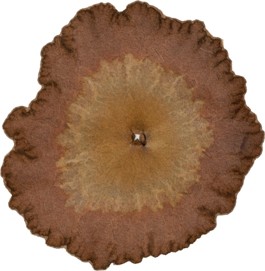
Figure 9. Soil Chromatography of Garden Soil Sample
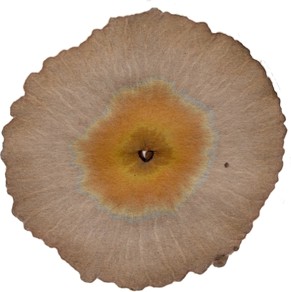
Figure 10. Soil Chromatography of Mine Dump Soil Sample
Artistic Practice as Inquiry
In this project, artistic practice operates not as illustration but as a mode of thinking that unfolds through action. Collecting soil, preparing samples, waiting for reactions, and interpreting emergent patterns constitute a research process shaped by intuition, chance, and material resistance. Research questions are not fixed in advance; they arise through engagement with the process itself (Borgdorff, 2012). Knowledge is produced as situated insight, inseparable from the conditions under which it emerges:the mine dumps, the chemical reactions, the temporal unfolding of the chromatograms (Haraway, 1988). The resulting soil portraits function as epistemic artefacts. They do not explain extraction, nor do they resolve its consequences. Instead, they hold extraction in suspension, allowing its afterlife to be sensed rather than stabilised.
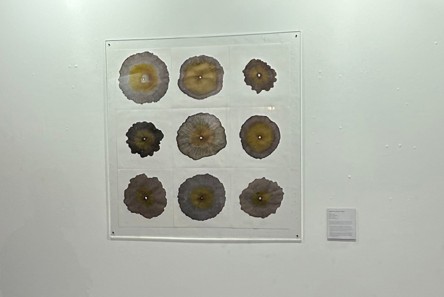
Figure 11. Soil Portraits: Traces of Extraction, 2025, Fine Art Prints, 9 Prints, 30 × 30 cm.
Thinking with the Ground
Intersectionality, here, is understood as a material condition, a convergence of geological time, industrial processes, chemical stress, and environmental exposure that persists within the soil itself, and environmental exposure intersect within the soil, co-producing conditions that persist and mutate (Bennett, 2010; Tsing, 2015).
The chromatograms make these intersections perceptible without reducing them to representation. Dense cores register accumulation; fractured rings suggest disturbance; diffused edges indicate leaching and dispersal. These are not metaphors, but material traces of intersecting processes operating across scale and duration.
This project proposes artistic research as a methodology capable of thinking with extraction landscapes rather than about them.
Through soil chromatography, it demonstrates how artistic practice can forms of knowledge that resist disciplinary containment and propositional certainty (Haraway, 1988).
The shift from terra firma to relational ground repositions both land and inquiry as dynamic processes. The mine dump is no longer a passive remainder of history, but an active participant in the present, one that continues to speak through chemical reactions, material transformations, and disrupted ecologies (Bennett, 2010; Tsing, 2015).
To work with such ground is not to seek resolution, but to remain attentive to extraction’s ongoing material afterlives. Artistic research, in this sense, becomes a practice of staying with the trouble, holding matter open, and attending to the ways material traces continue to communicate the ongoing effects of extraction.
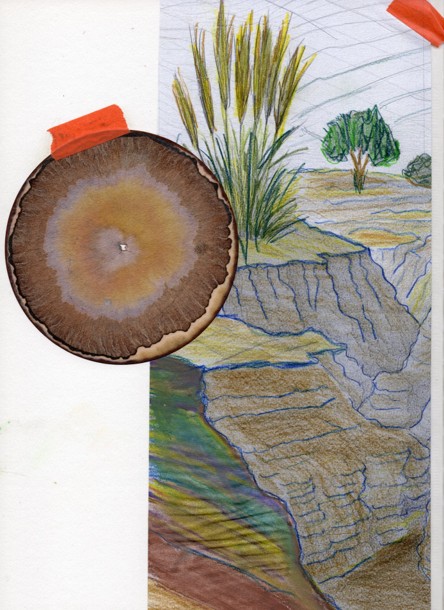
Figure 12. Impressions of the Soweto
References:
01. Bennett, J. (2010). Vibrant matter: A political ecology of things. Duke University
02. Borgdorff, H. (2012). The conflict of the faculties: Perspectives on artistic research and academia. Leiden University Press.
03. Coole, Diana & Samantha Frost (2010) New Materialisms: Ontology, Agency, and Politics. Duke University Press.
04. Davis, Heather & Etienne Turpin (2015) Art in the Anthropocene: Encounters Among Aesthetics, Politics, Environments and Epistemologies. Open Humanities
05. Haraway, D. (1988). Situated knowledges: The science question in feminism and the privilege of partial Feminist Studies, 14(3), 575–599. https://doi.org/ 10.2307/3178066
06. Krzywoszynska, A., & Marchesi, G. (2020). Toward a relational materiality of
07. Environmental Humanities, 12(1), 118–138. https://doi.org/10.1215/22011919-8142251
08. Latour, Bruno (2004) Politics of Nature: How to Bring the Sciences into Harvard University Press.
09. Tsing, A. L. (2015). The mushroom at the end of the world: On the possibility of life in capitalist Princeton University Press.