

Abstract
In an era of accelerated movement and mobility, individuals increasingly inhabit multiple places, temporalities, and modes of belonging all at once. Movement across geographies, whether through travel, migration, or everyday displacement, produces layered identities formed through memory, sensation, and lived experience. Memories do not remain fixed in the past; they surface unpredictably, interrupt the present, and reshape perception as thought and sensation collide.
Memories and Thoughts Collide explores memory and thought as an intersectional space where personal history, cultural belonging, spirituality, and cognition overlap. Through video practice situated within urban and domestic environments, the work examines how memories travel, fragment, and resettle, revealing how identities are continually reformed through movement, attention, and repetition. A person may stand within a crowded street while simultaneously inhabiting internal landscapes of remembrance, association, and reflection.
Treating memory as both material and methodology, the project positions intersectionality not as a fixed identity framework, but as a temporal and perceptual condition. The work asks what emerges when inner and outer worlds meet, and how these intersections generate new forms of meaning, belonging, and visual language within contemporary artistic practice.
Keywords: Memory, Intersectionality, Video Art, Embodied Perception
Memories and Thoughts Collide emerges from a sustained engagement with memory as a lived, unstable, and evolving process rather than a fixed archive of the past. Memory in this work is not approached as something that can be neatly recalled or accessed at will, but as something that returns unpredictably, interrupts the present, and reshapes perception in subtle and often unnoticeable ways.
Thought is often understood as deliberate, reflective, and analytical, an activity associated with intention and conscious reasoning. Yet lived experience suggests that memory and thought rarely operate in isolation. They overlap, interrupt one another, and exist in constant negotiation. This paper reflects on how these processes collide and intersect through a video work situated within urban and domestic spaces, using repetition, sound, movement, and duration as methods of inquiry rather than explanation.
The video does not attempt to narrate a story, document a journey, or represent a singular experience. Instead, it constructs a temporal field in which memory and thought continually intersect. Through observation, repetition, fragmentation, and rhythmic return, the work challenges linear progression and mirrors the uneven way cognition unfolds in everyday life. Rather than functioning as an illustration of theoretical ideas, the video becomes a mode of thinking in itself. Knowledge emerges through sustained attention to sensation, rhythm, and movement rather than through language alone. In this sense, the work aligns with a practice-led understanding of research in which insight develops through the process of making.
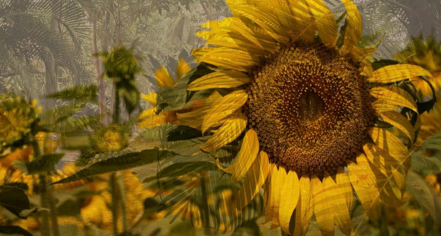
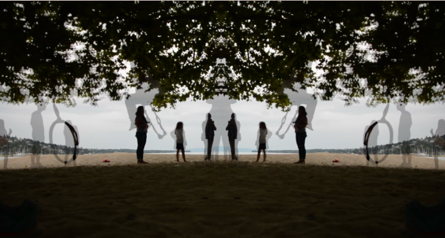
Within the methodology of the work, editing and framing operate not simply as technical procedures but as ways of visualising cognitive processes. At several moments, overlapping screens appear within the video, allowing different fragments of experience to co-exist simultaneously. These compositions suggest that memory and thought do not unfold sequentially but occur in parallel fields of awareness. Perception, recollection, and reflection occupy the same temporal space, intersecting rather than replacing one another. By allowing multiple images to share the screen, the work makes visible the layered condition of cognition itself. The viewer encounters simultaneous moments that echo the way memory surfaces while thought continues to process the present.
Memory is frequently positioned as something belonging to the past, while thought is associated with the present moment (Bergson, 1911). This distinction proves ineffective when examined through lived experience. Memories surface without warning, triggered by sound, movement, texture, or place, while thought frequently loops back on itself, revisiting and reinterpreting what has already occurred. The video, therefore, approaches time not as a sequence of discrete moments but as a fluid field in which past and present remain intertwined. Henri Bergson’s notion of duration provides an important framework for understanding this instability. Bergson describes time as a continuous flow in which the past asserts itself on the present rather than disappearing behind it (Bergson, 1911). Memory, within this understanding, is not stored elsewhere and retrieved when needed. It remains active within perception, shaping how the present moment is experienced.
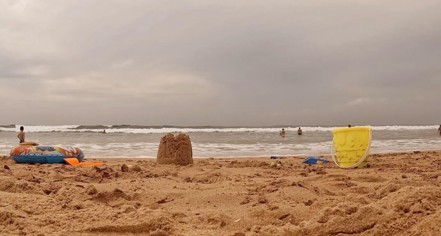
This philosophical understanding of time resonates strongly with certain cinematic practices that allow duration to unfold rather than compressing experience into narrative progression. Abbas Kiarostami’s film “24 Frames” offers an example of this approach (Kiarostami, 2017). Composed of contemplative scenes that unfold within extended shots, the film demonstrates how a single image can contain multiple layers of temporal experience. Inspired by this sensibility, the video opens with a long take of a child playing at the beach. Within this moment, the intersecting roles of artist and mother quietly shape the unfolding scene.
The shot develops slowly, allowing movement, sound, and atmosphere to accumulate without interruption. Rather than functioning as documentation, the image becomes a fragment of lived time in which observation, memory, and reflection begin to form simultaneously. The opening sequence establishes the temporal rhythm of the work, suggesting that memory can emerge through sustained attention rather than through rapid sequences of images.
The work also resonates with Aristotle’s understanding of memory as inseparable from sense perception (Aristotle, 1984). For Aristotle, memory arises through phantasia, an imaginative faculty shaped by sensory impressions and time (Aristotle, 1984). Memory is not an abstract recall but a trace left within the body, gradually altered through duration and experience. In Memories and Thoughts Collide, memory similarly appears not as narrative recollection but as sensation. Gestures, movements, and rhythms surface as carriers of memory, often felt before they are consciously recognised.
The video allows these sensory fragments to unfold without using explanation, reinforcing the idea that cognition is grounded in embodied experience rather than detached reasoning.
Attention itself becomes a key site where memory and thought collide. Attention rarely operates evenly. At times it lingers; at others, it drifts. Certain moments insist on being held, while others pass almost unnoticed, only to return later with unexpected intensity. The video mirrors this unevenness through variations in duration. Some scenes unfold slowly, inviting prolonged observation, while others appear briefly and disappear again. This shifting rhythm reflects the way memory privileges sensation, repetition, and affect over narrative significance. What becomes memorable is not necessarily what appears important at the moment of experience.
The camera’s relationship to space reflects a similar instability. Public spaces play an important role in the formation of memory within the work. Many of the environments encountered in the video could be described as touristic or collectively visited sites, places where people gather to observe, photograph, and remember. Such spaces are often understood primarily as spectacles or destinations, yet they also function as quiet sites where personal memories take shape. Standing among strangers who are themselves photographing, observing, and moving through the same environment creates a layered field of attention. Within these moments, memory is formed not only through private reflection but through shared acts of looking and recording.
The video observes these gestures without interruption or judgement. People photographing monumental architecture with their phones appear throughout the work. These actions reveal an impulse to secure experience through documentation, suggesting that memory can be captured and stored externally through images. The work does not critique this impulse but quietly situates it within a broader field of observation. As an observer, I film individuals who are themselves engaged in making memories. While they attempt to preserve their experiences through photographs, the camera I hold simultaneously transforms these encounters into another layer of memory production. Filming, therefore, becomes a reflexive act. It records the memory-making of others while generating a parallel memory for the filmmaker.
This reflexive dimension resonates with Jean-Paul Sartre’s understanding of consciousness as intentional (Sartre, 2001). For Sartre, consciousness is always consciousness of something. Memory is not stored as an object waiting to be retrieved; it is continually re-enacted within the present. Remembering, therefore, becomes an activity rather than a recovery of the past. Within the video, the camera does not simply capture memory. It participates in its formation.
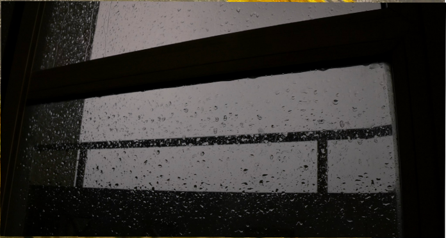
As the work moves across locations, the camera occupies partial and shifting positions. At times, it looks outward from interiors; at others, it observes reflections through windows or pauses at thresholds between public and private space. These positions emphasise the camera’s role as a participant rather than a detached observer. What appears within the frame is shaped by proximity, interruption, and circumstance. In this way, the act of filming parallels the act of remembering. Both are selective, incomplete, and shaped by what remains just outside the field of perception.
Movement across different spaces further complicates the relationship between memory and place. The video shifts between urban environments and domestic interiors without identifying specific locations. Rather than anchoring memory to a fixed geography, these transitions suggest that memory travels. Experiences accumulate across spaces and remain internally carried rather than externally located. Thought may attempt to organise these experiences into coherent narratives, yet memory often returns through fragments: gestures, textures, rhythms, and fleeting images that resist chronological order.
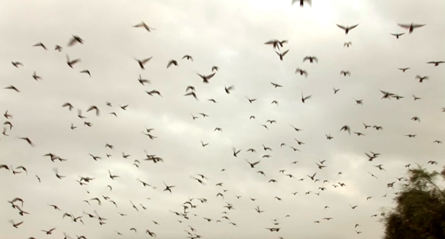
This movement through space is inseparable from the overlapping roles through which the work is produced. Being a mother, a visual artist, a traveller, and an observer does not occur sequentially but simultaneously. These roles intersect within the same moments of attention. In one scene, my own artistic practice briefly appears within the frame, creating a moment where the act of making art becomes visible within everyday life. My artistic practice often engages with birds and their movements, a recurring motif that appears across much of my photographic and video work. In the video, this presence of birds and their flight echoes broader ideas of movement, observation, and freedom, subtly connecting the natural world with human experience. The inclusion of this motif also reflects how different aspects of my identity and artistic concerns intersect within the work. Motherhood, artistic practice, travel, and observation are not isolated categories but overlapping positions that shape how I see and record the world. Through this intersectionality, the video reveals how creative practice emerges from multiple, entangled perspectives rather than a single, fixed viewpoint. The video, therefore, does not separate artistic practice from daily experience. Instead, it acknowledges that creative work emerges from within the entanglements of ordinary life.
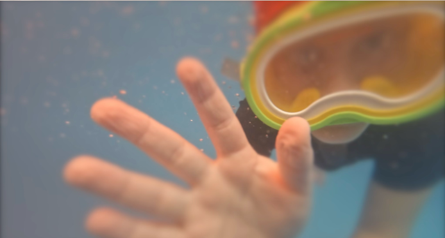
Gradually, the video shifts away from monumental spaces toward moments that resist stabilization, such as reflections seen through windows, fleeting domestic scenes, birds in flight, water bodies such as lakes, oceans, and swimming pools, as well as public gatherings where people dance or children move in and out of the frame. The work also incorporates fragments of personal vacation videos recorded by the artist during travel. These images are not presented as documentation of specific events but as traces of moments that continue to hold emotional or cognitive significance for the artist. Their presence reflects how certain images persist in memory and return unexpectedly within present perception, echoing Henri Bergson’s idea that the past remains active within the present (Bergson, 1911). These images are not collected as records of events but as traces of attention. They register moments that become memorable not because they are exceptional but because they are intimate and recurring.
Thought becomes visible through moments of disruption and overlap. Bodies cross paths, appear to move through one another, or intersect through editing and framing. These encounters remain unresolved, producing subtle interruptions in perception. Thought attempts to organise direction and intention, while memory draws attention toward sensation and familiarity. The resulting collision echoes everyday experiences in which reflection interrupts action and memories surface unexpectedly within the present.
As repetition intensifies, the work begins to evoke sensations of déjà vu (Bergson, 1911). Familiarity emerges without a clear origin, collapsing past and present into a single perceptual moment. Thought struggles to explain this recognition, while memory insists on its presence. These moments destabilise linear time, reinforcing Bergson’s notion of duration and suggesting that perception and memory remain inseparable within lived experience (Bergson, 1911).
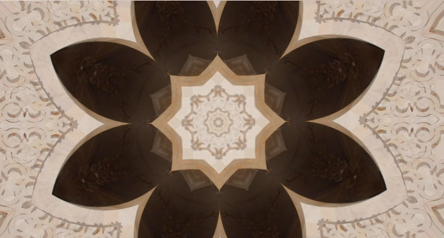
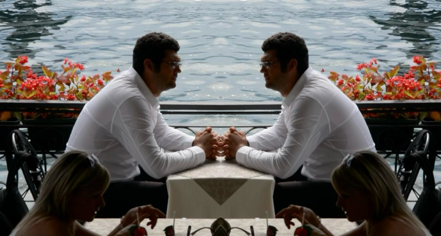
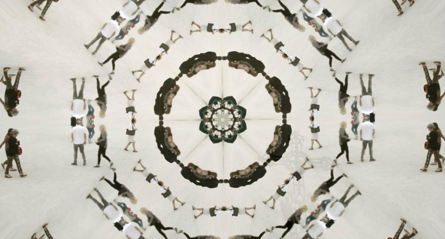
Kaleidoscopic sequences introduce another transformation within the visual field. Individual bodies dissolve into patterned movement, creating images that suggest both unity and multiplicity. Through repetition and symmetry, the image begins to resemble a collective rhythm rather than a singular perspective. Memory and thought appear here not as isolated mental processes but as movements that circulate across bodies and shared spaces.
Sound plays a crucial role in sustaining continuity across these visual shifts. Beats, musical fragments, and the rhythmic recitation of zikr persist across spatial transitions, functioning as internal rhythms rather than external cues. Zikr, a Sufi devotional practice involving the repetitive recitation of sacred words, names, or phrases in remembrance of the Divine, becomes both a spiritual and rhythmic structure within the work. These sounds mirror the way certain memories remain embedded within the body regardless of location. The presence of zikr introduces a Sufi understanding of remembrance that resonates strongly with the structure of the work. In the writings of Jalaluddin Rumi, remembrance does not refer to recalling the past but to sustaining presence through repetition (Rumi, 2004). Repetition becomes a means of inhabiting time rather than overcoming it.
Within the video, zikr operates as a collective rhythm that gathers memory and thought into a shared temporal field. The repetition of sound parallels the visual repetition of gestures and movements, reinforcing the idea that remembrance is not a singular act but an ongoing practice of attention. Memory here becomes rhythmic rather than narrative.
The process of making the work, therefore, aligns with a practice-led approach to knowledge. Meaning emerges through doing rather than through explanation.
Thought does not precede experience; it follows it. The video becomes a space where thinking occurs through movement, framing, repetition, and sound. Rather than illustrating ideas, the work generates them through its own temporal structure.
Within this process, the ethics of seeing become unavoidable. Looking is never neutral. Every act of framing involves choice, exclusion, and emphasis, shaping not only what becomes visible but also how it is perceived. Seeing is informed by history, memory, and position. In Memories and Thoughts Collide, this situated way of seeing becomes visible through partial views, reflections, and obstructed perspectives. The camera does not claim total knowledge of its surroundings. Instead, it reveals its own limitations.
The viewer enters this field of partial perception carrying their own histories and memories. The video does not guide interpretation through narrative explanation. Instead, it invites an encounter shaped by the viewer’s own modes of attention. Carl Jung’s description of psychological functions: sensation, feeling, thinking, and intuition, offer one way of understanding how viewers may engage differently with the work (Jung, 1971).
Some viewers may respond most strongly to rhythm, texture, or sound. Others may be drawn toward emotional tone, conceptual reflection, or intuitive resonance. No single mode of engagement is prioritised. Meaning emerges through the interaction between the work and the viewer’s perceptual and mnemonic frameworks.
This openness reinforces the idea that memory does not reside solely within the image. It is activated through encounter. As viewers recognise fragments that resonate with their own experiences, memory surfaces in ways that are personal, uneven, and unpredictable. Thought follows, attempting to interpret or contextualise these sensations. The collision between memory and thought, therefore, extends beyond the artist’s experience into the act of viewing itself.
As the video approaches its conclusion, the density of repetition gradually loosens. Gestures dissipate, visual patterns thin, and the image opens into quieter moments of attention. This shift does not provide resolution but release. What remains is residue rather than closure, a sense of having moved through a temporal condition rather than having arrived at a final statement.
Memories and Thoughts Collide does not attempt to define memory or thought as stable categories. Instead, it emphasizes their overlap, allowing collision itself to become a productive space of inquiry. Through repetition, sound, movement, and duration, the video enacts a way of thinking that resists linear explanation. Memory and thought intersect within individuals, between individuals, and within the image itself. The work remains open, allowing memory and thought to continue colliding long after the image fades.
Video Specs:
Title:
Memories and Thoughts Collide
Artist:
Nazia Akram
Year:
2026
Duration:
8 minutes 21 seconds
Format:
Single-channel video with sound
Sound:
Layered soundscape including rhythmic beats, ambient textures, nature sounds and zikr (repetitive vocal remembrance)
Video description:
Memories and Thoughts Collide is a single-channel video work that explores memory and thought as unstable and overlapping processes rather than fixed or separable states. Moving between urban environments and domestic interiors, the video constructs a temporal field in which past and present co-exist. Instead of following a linear narrative, the work unfolds through repetition, interruption, and rhythmic return, reflecting the way cognition is experienced without logic explanations.
The camera does not claim mastery over space; instead, it remains responsive to movement, proximity, and chance. In this sense, filming mirrors remembering, as both are selective, contingent, and incomplete. Repetition structures the work as gestures return with variation, producing sensations of recognition and disorientation that verge on déjà vu. Split-screen sequences further visualise how memory and thought unfold simultaneously rather than sequentially.
Sound functions as an internal pulse throughout the video. Beats, ambient textures, and zikr persist across visual shifts, acting as carriers of memory rather than simple accompaniments. The work engages intersectionality as a lived temporal condition in which roles such as artist, mother, observer, and traveller coexist, shaping how memory and thought continue to collide beyond the frame.
Time: 00:01:45:15
Time: 00:03:03:21
Time: 00:03:46:17
Time: 00:04:22:10
Time: 00:40:38:03
Time: 00:05:42:22
Time: 00:06:04:14

Time: 00:06:11:09
Time: 00:07:11:21

Time: 00:06:52:07
Time: 00:08:14:24

Time: 00:08:39:04
References:
01. (1984). On memory and recollection. In J. Barnes (Ed.), The complete works of Aristotle (Vol. 1, pp. 713–723). Princeton University Press. (Original work written ca. 350 BCE)
02. Bergson, (1911). Matter and memory (N. M. Paul & W. S. Palmer, Trans.). George Allen & Unwin. (Original work published 1896)
03. Berger, (1972). Ways of seeing. Penguin Books.
04. Deleuze, (1993). The fold: Leibniz and the Baroque (T. Conley, Trans.). University of Minnesota Press. (Original work published 1988)
05. Jung, G. (1971). Psychological types (H. G. Baynes, Trans.; R. F. C. Hull, Rev.). Princeton University Press. (Original work published 1921)
06. Kiarostami, (Director). (2017). 24 frames [Film]. Janus Films.
07. Rumi, J. (2004). The soul of Rumi: A new collection of ecstatic poems (C. Barks, ). HarperCollins. (Original poems written 13th century)
08. Sartre, -P. (2001). Being and nothingness (H. E. Barnes, Trans.). Routledge. (Original work published 1943)